Author
Books like William McIlvanney
6 books we recommend to William McIlvanney readers, drawn from Laidlaw and Docherty — each with the reason why.
If you loved Laidlaw
Raymond’s unnamed detective investigates the murder of Charles Staniland, an alcoholic writer whose tapes leave behind a fiercely articulate account of his life. Like Laidlaw, he becomes less interested in identifying a criminal than in rescuing a damaged human being from the indifference surrounding his death.
The prose is severe, philosophical and suddenly tender; despair becomes a form of moral scrutiny rather than noir decoration. A landmark of British noir and the opening Factory novel, it takes McIlvanney’s conviction that every victim contains a whole world and pushes it toward a devastating extreme.
Maureen O’Donnell wakes to find her boyfriend murdered in her flat—and discovers that her psychiatric history makes her the police’s easiest suspect. Mina understands, as McIlvanney does, how institutions convert prejudice into common sense and how violence travels through families, workplaces and streets.
But Garnethill is no imitation of Laidlaw. Its energy comes from Maureen’s caustic humour, stubbornness and wary alliances with other women. Mina’s Glasgow is socially exact without becoming sociological, and her anger is steadied by compassion. This debut won the CWA John Creasey Memorial Dagger and announced one of Scottish crime fiction’s defining voices; its mixture of vulnerability and defiance remains electrifying.
Across four investigations separated by years, New Orleans private detective Lew Griffin searches for missing people while his own identity—as detective, writer, teacher and Black man—keeps shifting beneath him. Sallis strips the detective novel down to memory, silence and the difficulty of truly knowing another person.
A reader who relished Laidlaw’s aphoristic intelligence will recognize the same pleasure here: sentences that stop the story for an instant because they have seen something painfully exact. Yet Sallis writes in lean, jazz-like fragments rather than McIlvanney’s muscular cadences. The first of the acclaimed Lew Griffin novels, The Long-Legged Fly is short enough to read quickly and deep enough to haunt every book that follows it.
If you loved Docherty
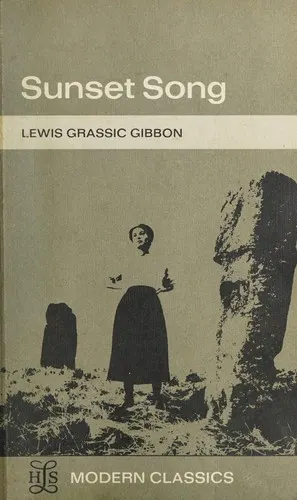
Chris Guthrie grows up in a farming community in the Mearns, divided between her hunger for learning and her attachment to the land. Like McIlvanney, Gibbon makes a whole social world breathe: work shapes bodies and speech; neighbours can be sustaining, vicious or both; historical change enters ordinary homes rather than remaining an abstraction.
Its greatest kinship with Docherty is tonal. Gibbon’s Scots-inflected prose can be earthy, intimate and suddenly magnificent, granting rural labour the same tragic stature McIlvanney gives mining life. Widely regarded as one of the defining Scottish novels of the twentieth century, Sunset Song is not merely a period portrait: it is an unforgettable reckoning with what endurance costs.
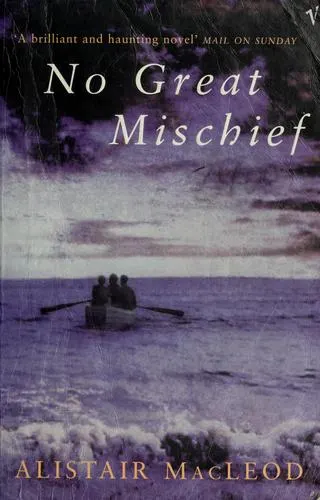
Alexander MacDonald, a Canadian orthodontist, looks back across generations of a Cape Breton family shaped by emigration, dangerous labour, drinking, music and an almost sacred loyalty to kin. Readers who cherish the Docherty household will recognize MacLeod’s understanding that family pride is both shelter and burden—and that taciturn working men may carry enormous reservoirs of tenderness.
MacLeod’s prose has the cadence of remembered song, moving effortlessly from intimate detail to ancestral scale. The novel won the International Dublin Literary Award and inspires unusual devotion because its emotional power feels earned rather than engineered. Few books capture so beautifully the way hardship becomes family legend, and family legend becomes identity.
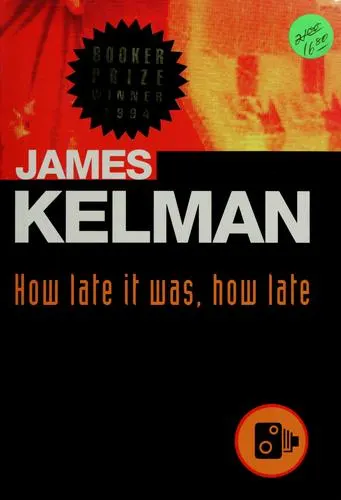
This is the fiercest recommendation: a plunge into the consciousness of Sammy, an unemployed Glaswegian trying to navigate injury, bureaucracy and official disbelief. Kelman strips away the polite language through which institutions disguise contempt. Sammy’s voice—profane, funny, evasive, resourceful—refuses to let outsiders define the limits of his humanity.
Where Docherty gives working-class experience tragic breadth, Kelman makes the act of speaking from within that experience politically explosive. The novel’s 1994 Booker Prize victory provoked controversy precisely because Kelman would not translate or tidy his protagonist for respectable readers. Its demanding vernacular soon becomes its force: you do not observe Sammy from a safe distance; you inhabit his struggle to remain himself. After McIlvanney, missing Kelman would mean missing one of the boldest consequences of the literary ground Docherty helped secure.