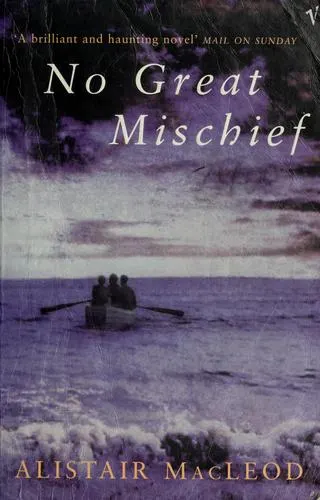
Books like No Great Mischief
If MacLeod’s fierce belief that family can be inheritance, refuge, and lifelong burden still haunts you, these three novels carry that emotional truth into strikingly different worlds.
If you liked No Great Mischief, you’ll love these
Not lookalikes — kindred books. Each one shares something essential with No Great Mischief, and we tell you exactly what.
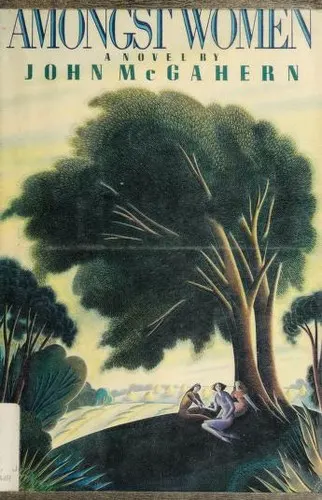
Like No Great Mischief, this is a compact novel with the weight of an ancestral saga. Michael Moran, an aging veteran of the Irish War of Independence, rules his rural household through pride, grievance, tenderness, and fear; his children may leave, but none escapes the emotional country he has made of the family.
McGahern’s prose is quieter and more austere than MacLeod’s, yet it has the same extraordinary compression: landscapes, repeated rituals, and half-spoken memories accumulate until private life feels inseparable from history. Booker-shortlisted and widely regarded as McGahern’s masterpiece, Amongst Women understands that devotion can survive damage without redeeming it. Its final pages leave an entire family resonating in the mind.
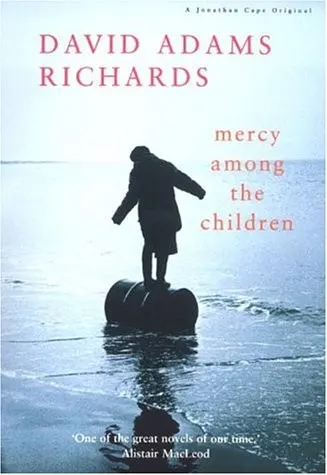
MacLeod’s people endure hardship with a loyalty that can look noble, ruinous, or both. Richards brings comparable moral intensity to the impoverished Walsh family in rural New Brunswick. After the father vows never again to answer violence with violence, his principles become an inheritance his children must bear in a community eager to punish weakness.
Richards writes about poverty, shame, resentment, and love without sociological distance. His characters make terrible judgments about one another, but the novel keeps exposing the pain beneath those judgments, forcing the reader to reconsider what strength and goodness cost. Winner of the Giller Prize, Mercy Among the Children is one of the great Canadian novels of family loyalty under siege—rawer than MacLeod, but just as unwilling to treat kinship as a sentimental comfort.
For another novel in which scattered siblings remain bound to a home they have spent years trying to outgrow, read The Green Road. Enright follows the Madigan children away from County Clare into sharply realized adult lives, then draws them back toward their formidable mother, Rosaleen, whose need for love can feel indistinguishable from accusation.
What makes this a true companion to No Great Mischief is not simply the family structure but the way absence becomes a form of presence. Enright gives each sibling a distinct consciousness, showing how one household produces several incompatible histories. Her wit is sharper and more mercurial than MacLeod’s solemn lyricism, but beneath it lies the same ache: blood ties preserve what they also distort. An Irish Book Awards Novel of the Year and a Booker longlistee, The Green Road has the amplitude of a saga without wasting a sentence.