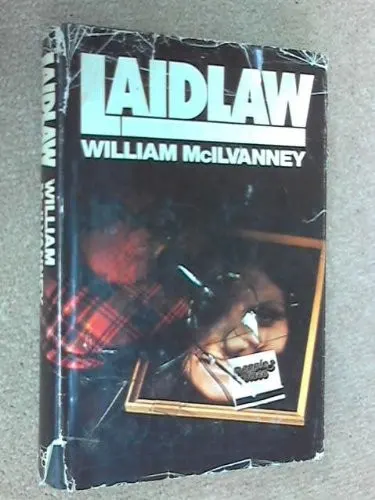
Books like Laidlaw
Laidlaw turns a murder inquiry into an argument with Glasgow: every pub, tenement and conversation tests whether intelligence can remain humane amid brutality. These three novels share its moral urgency, bruising lyricism and refusal to treat crime as mere puzzle-work.
If you liked Laidlaw, you’ll love these
Not lookalikes — kindred books. Each one shares something essential with Laidlaw, and we tell you exactly what.
Raymond’s unnamed detective investigates the murder of Charles Staniland, an alcoholic writer whose tapes leave behind a fiercely articulate account of his life. Like Laidlaw, he becomes less interested in identifying a criminal than in rescuing a damaged human being from the indifference surrounding his death.
The prose is severe, philosophical and suddenly tender; despair becomes a form of moral scrutiny rather than noir decoration. A landmark of British noir and the opening Factory novel, it takes McIlvanney’s conviction that every victim contains a whole world and pushes it toward a devastating extreme.
Maureen O’Donnell wakes to find her boyfriend murdered in her flat—and discovers that her psychiatric history makes her the police’s easiest suspect. Mina understands, as McIlvanney does, how institutions convert prejudice into common sense and how violence travels through families, workplaces and streets.
But Garnethill is no imitation of Laidlaw. Its energy comes from Maureen’s caustic humour, stubbornness and wary alliances with other women. Mina’s Glasgow is socially exact without becoming sociological, and her anger is steadied by compassion. This debut won the CWA John Creasey Memorial Dagger and announced one of Scottish crime fiction’s defining voices; its mixture of vulnerability and defiance remains electrifying.
Across four investigations separated by years, New Orleans private detective Lew Griffin searches for missing people while his own identity—as detective, writer, teacher and Black man—keeps shifting beneath him. Sallis strips the detective novel down to memory, silence and the difficulty of truly knowing another person.
A reader who relished Laidlaw’s aphoristic intelligence will recognize the same pleasure here: sentences that stop the story for an instant because they have seen something painfully exact. Yet Sallis writes in lean, jazz-like fragments rather than McIlvanney’s muscular cadences. The first of the acclaimed Lew Griffin novels, The Long-Legged Fly is short enough to read quickly and deep enough to haunt every book that follows it.