Author
Books like William Lindsay Gresham
3 books we recommend to William Lindsay Gresham readers, drawn from Nightmare Alley — each with the reason why.
If you loved Nightmare Alley
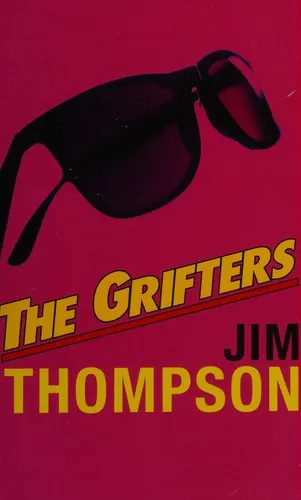
Roy Dillon lives by the short con, coolly separating strangers from small sums—until a routine swindle leaves him badly hurt and brings his formidable mother back into his life. Thompson understands, as Gresham does, that professional deception is not merely a job but a way of seeing: every kindness looks like leverage, every relationship like a contest whose loser has failed to spot the angle.
The prose is leaner than Gresham’s, but the emotional atmosphere is just as poisoned. Thompson strips noir down to greed, fear, sexual jealousy, and the terrible difficulty of leaving the role one has built to survive. Long regarded as one of his finest novels, The Grifters is brutally compact: once its three central predators begin circling one another, not a sentence feels safe.
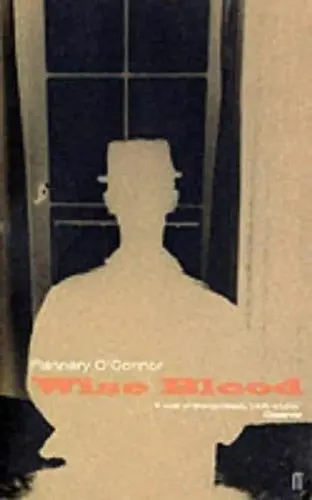
Back from the army, Hazel Motes arrives in a Southern city determined to preach a new Church Without Christ. Around him gather street evangelists, opportunists, obsessives, and salesmen of dubious wonders. O’Connor’s subject is the violently thin boundary between rejecting belief and being possessed by it—the same territory Nightmare Alley enters whenever a manufactured miracle begins exerting real power over its maker.
This is a funnier novel than Gresham’s, though its comedy has teeth. O’Connor turns American hustle into grotesque theology: her characters peddle salvation as spectacle while hungering for something no pitch can satisfy. Her debut novel remains one of the defining works of Southern Gothic, and Hazel Motes is unforgettable precisely because O’Connor refuses to make him either a simple fraud or a simple seeker. Readers haunted by Gresham’s collision of cynicism and spiritual need should not miss it.
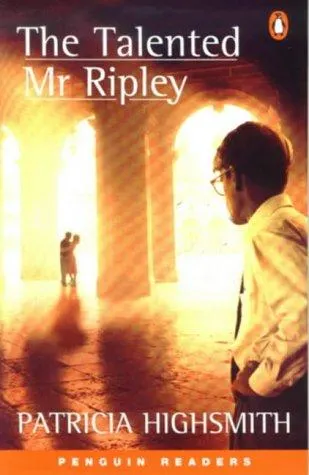
Tom Ripley begins as a precarious young man alert to every humiliation and hungry for the ease enjoyed by richer people. When he is offered a trip to Italy to retrieve a wealthy acquaintance’s son, he sees not only an opportunity but a possible new self. Highsmith then performs her great trick: she places the reader inside Tom’s improvisations so completely that anxiety, admiration, and complicity become almost indistinguishable.
Like Stanton Carlisle, Tom treats identity as an act that can be perfected through close observation. Both men possess genuine talent; both are driven by class shame and the conviction that ordinary rules apply only to people without nerve. The first and most celebrated of Highsmith’s five Ripley novels, this is not simply a landmark of psychological suspense. It is one of literature’s most unnervingly persuasive portraits of self-invention without a moral center.