Author
Books like Walker Percy
6 books we recommend to Walker Percy readers, drawn from The Moviegoer and Love in the Ruins — each with the reason why.
If you loved The Moviegoer
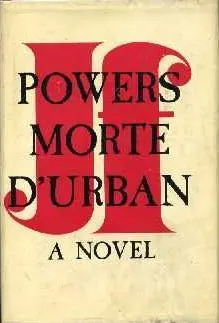
Father Urban is a gifted, worldly priest: energetic, persuasive, and considerably better at managing people than examining his own soul. Powers places him among shabby clerical institutions, petty rivalries, golf games, donors, and administrative absurdities, then lets those mundane pressures become a test of vocation.
Like Percy, Powers is a Catholic comic novelist who distrusts both pious uplift and fashionable despair. His dry exactitude makes spiritual complacency genuinely funny without making spiritual questions trivial. Winner of the National Book Award the year after The Moviegoer received it, Morte D'Urban is one of the great American novels about grace arriving where vanity has left almost no room for it.
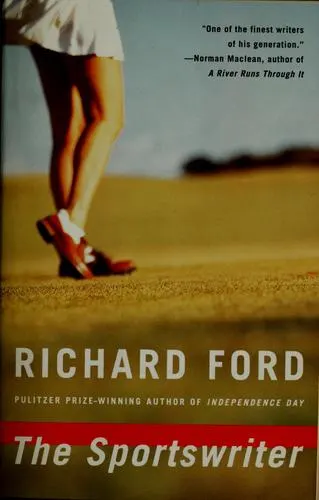
Frank Bascombe has built a tolerable life out of geniality, professional routine, and the art of not looking too hard at pain. Over an Easter weekend, his practiced detachment begins to reveal its costs. The kinship with Binx lies not simply in masculine drift but in the seductive intelligence of the drift: both narrators can turn evasion into a compelling philosophy and make ordinary encounters shimmer with meanings they hesitate to accept.
Ford’s poised, conversational prose catches every flicker between sincerity and performance. This novel inaugurated the celebrated Bascombe sequence, whose later volumes won the Pulitzer and PEN/Faulkner prizes, but its own rueful, searching voice remains singular. Anyone moved by Binx’s uneasy suspicion that an ordinary life may conceal an absolute demand should meet Frank Bascombe.
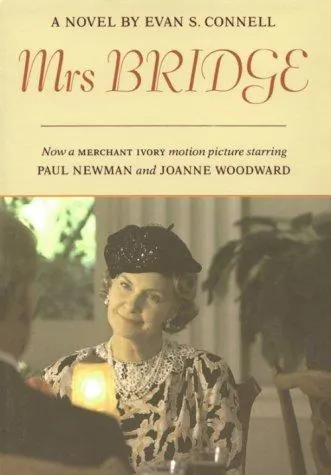
Connell builds a whole life from brief, immaculate scenes: a social call, an awkward exchange with a child, a purchase that somehow fails to satisfy. Mrs. Bridge is prosperous, respectable, and protected from catastrophe, yet small disturbances keep exposing a loneliness for which her world supplies no vocabulary.
Where Percy gives us Binx’s elaborate explanations, Connell shows what happens when existential unease can barely be articulated at all. His irony is exact but never cruel; each tiny comedy opens onto thwarted tenderness and unspent possibility. Long cherished by writers and discerning readers as a masterpiece of compression, Mrs. Bridge proves that quiet desperation need not announce itself to become devastating.
If you loved Love in the Ruins
Miller shares Percy’s gift for turning apocalypse into theological comedy. In the desert after civilization’s collapse, monks preserve scraps of technical knowledge whose meanings they barely understand. Their earnest scholarship is hilarious, yet Miller never treats faith—or human destructiveness—as a joke.
Like Percy, he distrusts both scientific salvation and easy anti-intellectualism. The real problem is fallen humanity wielding its splendid intelligence. Winner of the Hugo Award and now a cornerstone of post-apocalyptic fiction, this is the rare classic whose wit, Catholic imagination, and bleak diagnosis have only sharpened with age.
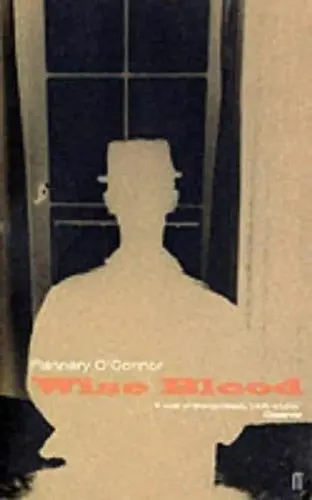
Hazel Motes returns from military service determined to escape belief, eventually preaching a Church Without Christ. Unfortunately for him, unbelief can become as consuming as faith. O’Connor called Hazel a “Christian malgré lui,” and that violent struggle against grace is precisely what should grip a Percy reader.
Her debut novel has the same Southern mixture of grotesquerie, comic salesmanship, spiritual emergency, and compromised flesh. Every preacher, confidence man, automobile, and roadside attraction seems ludicrously physical yet charged with metaphysical consequence. Few novels are so savage about self-deception—or so unwilling to conclude that a ridiculous person is therefore beyond redemption.
A mysterious pamphlet inducts the credulous Lamar Jimmerson into the Gnomon Society, an American esoteric order devoted to secret wisdom, dubious diagrams, and organizational squabbling. Portis watches its believers manufacture an all-explaining system from vanity, loneliness, and a desperate wish to belong.
That makes the novel a superb companion to Percy’s satire of diagnostic gadgets and totalizing ideologies. Portis writes cleaner, drier comedy: pompous declarations collapse under one perfectly chosen mundane detail, while fools remain oddly lovable. Long cherished by his devoted readership as a comic masterpiece, Masters of Atlantis catches an essential American absurdity—the conviction that salvation must be available through a correspondence course, if only one fills out the forms correctly.