Author
Books like Thornton Wilder
3 books we recommend to Thornton Wilder readers, drawn from The Eighth Day — each with the reason why.
If you loved The Eighth Day

A boyhood snowball thrown at the wrong person becomes the small accident around which an entire life arranges itself. Like Wilder, Davies uses a deceptively simple incident to investigate guilt, vocation, sainthood, fraud, and the mysterious roles people play in one another’s stories.
Davies’s learned, mischievous narrator can move from provincial comedy to theology and myth without losing his human scale. The idea of “fifth business”—the seemingly secondary figure without whom the drama cannot reach its meaning—could almost serve as a key to The Eighth Day. The novel launched Davies’s celebrated Deptford Trilogy, but its compactness and exhilarating completeness make it a marvel on its own.
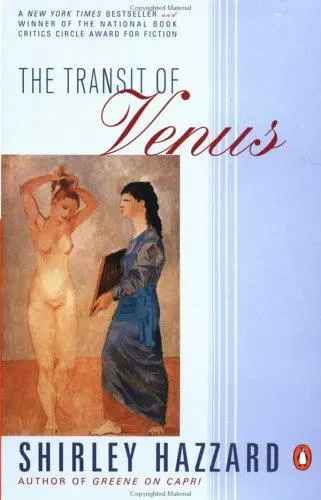
Hazzard announces a death almost immediately, then spends decades of fictional time revealing the design around it. That audacious structure will appeal to anyone who admired how The Eighth Day turns foreknowledge, coincidence, and withheld information into metaphysical suspense.
Following two orphaned Australian sisters into wider worlds, Hazzard writes as though every meeting might alter the geometry of several lives. Her sentences are polished and compressed, her intelligence unsparing; love here is inseparable from secrecy, timing, and moral perception. Winner of the National Book Critics Circle Award, The Transit of Venus has acquired the devoted readership of a masterpiece people press urgently on friends. Its final pages make the whole novel flare into a new pattern.
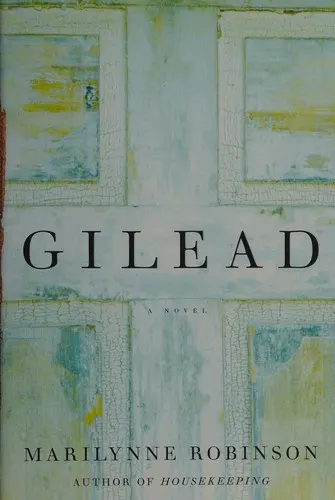
Where Wilder ranges across families and continents, Robinson concentrates his vision into a dying minister’s letter to his young son. Yet the spiritual amplitude is strikingly similar: both novels ask how grace might operate through flawed families, unfinished work, historical violence, and ordinary acts of attention.
John Ames writes about his abolitionist grandfather, his pacifist father, and the difficult inheritance of American Christianity with tenderness sharpened by doubt. Robinson never turns theology into doctrine; belief becomes a way of looking harder at another person. Her luminous sentences make sunlight, water, bread, and a child’s presence feel newly created. Gilead won both the Pulitzer Prize and the National Book Critics Circle Award, deserved recognition for a novel whose quietness conceals immense moral force.