Author
Books like Sylvia Townsend Warner
6 books we recommend to Sylvia Townsend Warner readers, drawn from Lolly Willowes and The Corner That Held Them — each with the reason why.
If you loved Lolly Willowes
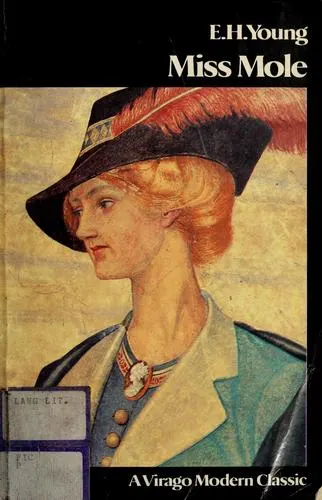
Hannah Mole is another supposedly negligible unmarried woman whose invisibility proves to be a form of power. Working as a housekeeper in a rigidly respectable household, she survives by intelligence, mischief, and a private commentary far sharper than anything she can safely say aloud.
Young shares Warner’s gift for making social comedy carry real anger: every small humiliation exposes the machinery that keeps women dependent, while Hannah’s evasions become acts of self-authorship. Winner of the James Tait Black Memorial Prize in 1930, Miss Mole is one of those superb interwar novels readers continually rescue from neglect. Lolly’s admirers will recognize its rare achievement: a spinster heroine treated not as a joke or a problem, but as the most complicated and compelling person in the room.
In the sober town of Lud-in-the-Mist, fairy fruit is contraband and neighboring Fairyland is officially treated as an embarrassment best denied. Mirrlees turns that premise into an exquisitely poised assault on bourgeois certainty: decorum, law, and common sense begin to seem much less substantial than the forbidden enchantment pressing at the town’s borders.
Like Warner, Mirrlees writes fantasy without ponderous world-building or sentimental whimsy. Her magic is sensuous, pagan, comic, and faintly dangerous—the return of everything respectable society has tried to suppress. Long cherished by fantasy writers and revived for new generations with an introduction by Neil Gaiman, this singular 1926 novel belongs beside Lolly Willowes as proof that rebellion can arrive quietly, carrying an unfamiliar scent.
Marian Leatherby is ninety-two, nearly toothless, and regarded by her family as disposable. Then a friend gives her a hearing trumpet, and the patronizing conversations around her become audible. What follows begins with crystalline deadpan comedy and opens into Carrington’s magnificently unruly surrealism.
Where Lolly Willowes slips free of the family story imposed upon her, Marian smashes the very categories—old woman, dependent, harmless eccentric—meant to contain her. Carrington makes female old age adventurous, conspiratorial, and cosmically important; her humor is never merely whimsical but anarchic in its refusal of reasonableness. A cult classic of feminist and surrealist fiction, The Hearing Trumpet offers the exhilarating spectacle of an overlooked woman discovering that the world is far stranger than her oppressors, and that she is equal to it.
If you loved The Corner That Held Them
Cather’s great ecclesiastical novel has Warner’s spacious, unhurried sense that a life is made less by decisive episodes than by repeated duties, minor frictions, journeys, meals, friendships, and accommodations to place. Its two French missionaries arrive in the newly annexed American Southwest, but Cather refuses the obvious adventure story: the book unfolds as a sequence of lucid, almost freestanding incidents across decades.
Like Warner, Cather can regard religious institutions without either piety or cheap debunking. Faith coexists with vanity, appetite, practical necessity, and administrative labor. Her prose is clearer and more solemn than Warner’s, yet it creates the same extraordinary enlargement of the everyday. Widely regarded as one of Cather’s masterpieces, this is a rare novel whose apparent simplicity deepens long after reading.
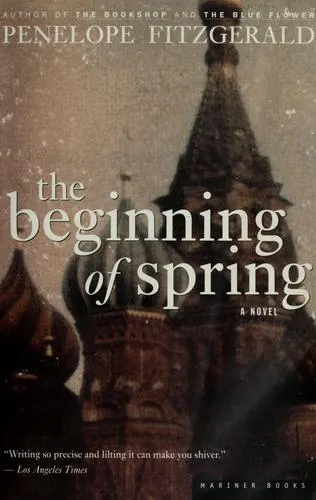
On the first page, in Moscow in 1913, Frank Reid’s wife disappears, leaving him with their children, a printing business, and no satisfactory explanation. A conventional novelist would turn that absence into a mechanism; Fitzgerald instead lets uncertainty spread through a whole social world of employees, servants, expatriates, opportunists, and dependents.
This Booker-shortlisted novel offers the closest tonal match here to Warner’s dry, glancing intelligence. Fitzgerald is fascinated by how households and workplaces actually function: who has keys, who watches the children, who owes money, who misunderstands whom. Her comedy is exact but never merely decorative, and beneath it lies Warner’s sense that people inhabit history without knowing what shape it will take. Short, elusive, and inexhaustibly rereadable, it performs more magic than novels three times its length.
In Visitation, the durable presence is not a heroine but a house beside a Brandenburg lake. Erpenbeck moves among its inhabitants while recurring passages about the gardener’s seasonal work establish another calendar: pruning, planting, repairing, clearing. The result is a communal history told through property, labor, possessions, and absences rather than through a single commanding plot.
Warner’s abbey accumulates meaning because generations use it without fully possessing it; Erpenbeck’s house does the same, though in a darker and more compressed register. Her cool precision makes historical catastrophe palpable through rooms, objects, and altered routines, never through inflated rhetoric. Visitation helped establish Erpenbeck’s international reputation, and deservedly so: it is a small, severe novel that changes how one imagines buildings remembering the people who pass through them.