Author
Books like Samantha Harvey
6 books we recommend to Samantha Harvey readers, drawn from Orbital and The Wilderness — each with the reason why.
If you loved Orbital
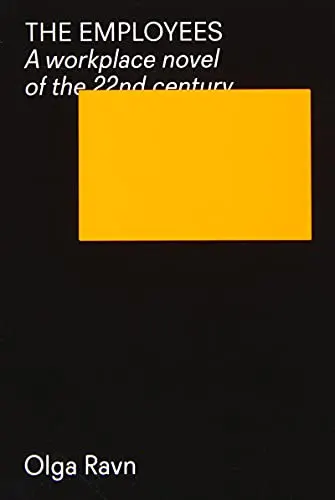
Like Orbital, this short, uncanny novel turns a spacecraft into a chamber for contemplating what makes us human. Told through statements from a crew of people and humanoid workers, it gradually reveals how mysterious objects brought aboard have awakened homesickness, desire and memories—sometimes in beings who should possess none of them.
Ravn’s fragmentary form is colder and stranger than Harvey’s lyricism, but it creates the same productive disorientation: individual voices begin to blur, while ordinary sensations acquire extraordinary force. Shortlisted for the International Booker Prize, The Employees has become a touchstone of literary science fiction because it makes questions about labour, embodiment and mortality feel intimate rather than abstract. It is tiny, eerie and inexhaustible.
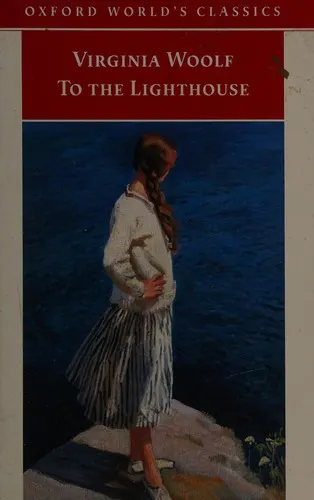
Harvey’s gliding transitions from one astronaut’s consciousness to another belong to a modernist tradition that Woolf brought to astonishing perfection. During a family’s stay on the Isle of Skye, a proposed trip to a lighthouse becomes the slender framework for a novel concerned with perception: how several people can occupy the same room, witness the same weather and nevertheless inhabit radically different worlds.
Woolf’s sentences move through minds as Orbital moves over continents, continually altering scale. A dinner can become a momentary victory over time; wind and darkness can make human lives seem both vanishingly small and unbearably precious. To the Lighthouse is canonical because its formal brilliance never hardens into an exercise: it remains piercingly alive to love, disappointment and the beauty that persists without us.
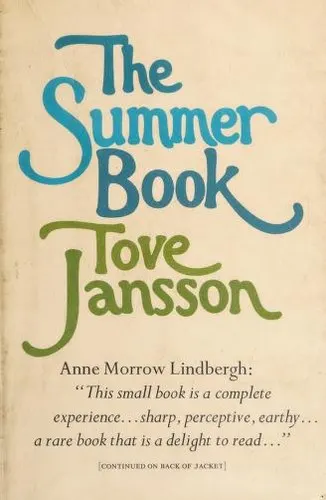
On a small Finnish island, an elderly artist and her young granddaughter spend a summer arguing, exploring and attending closely to moss, storms, animals and the changing sea. Jansson dispenses with a conventional plot, building the novel from lucid episodes whose modest surfaces conceal large questions about death, freedom and how to live alongside another person.
What links it most deeply to Orbital is its refusal to treat nature as scenery. Weather sets the terms of existence; the island is at once a whole world and a speck within one. Jansson’s prose is spare where Harvey’s is rhapsodic, and her humour is drier, but both writers understand that accurate attention can become a form of wonder. Long cherished by readers far beyond Jansson’s celebrated Moomin books, The Summer Book is one of those quiet novels that permanently sharpens the senses.
If you loved The Wilderness
Maarten Klein wakes in wintry New England and begins losing his command of time, language, and familiar things. Bernlef keeps us inside that altered consciousness, where a household object can become mysterious and the distant past more immediate than breakfast.
Like Harvey, he turns cognitive decline into a daring problem of form rather than a subject observed from safely outside. The prose is lucid even as Maarten’s world becomes unstable, creating an extraordinary tension between what he experiences and what the reader understands. A modern Dutch classic with an enduring international readership, Out of Mind is brief, devastating, and almost impossible to shake.
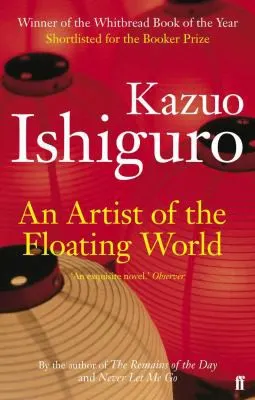
Ishiguro’s retired painter, Masuji Ono, believes he is calmly reviewing his career and family life. Yet qualifications, revisions, and oddly placed emphases gradually suggest that his memories may be protecting him from a harsher account.
A reader captivated by Jake’s uncertain recollections will recognize the peculiar intimacy of listening to a mind edit itself. But Ishiguro’s method is quieter and more controlled: whole moral catastrophes become visible through tiny evasions. This early novel helped establish the Nobel laureate’s signature achievement—the unreliable narrator who is never merely a puzzle, but a painfully human being trying to remain livable to himself.
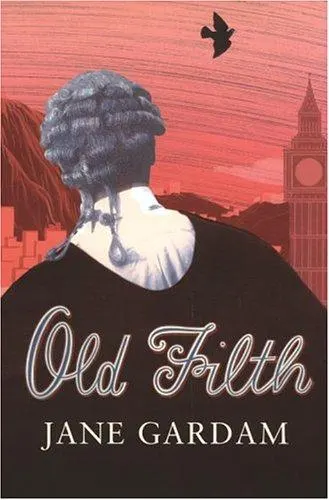
Sir Edward Feathers—known since childhood as FILTH, or “Failed in London Try Hong Kong”—has spent decades cultivating the polished identity of a distinguished colonial judge. In old age, the past begins arriving not as an orderly biography but in vivid, disruptive fragments.
Gardam offers the same exhilarating sense that a long life cannot be reduced to its public outline. Her touch, however, is more mischievous: she moves between comedy, loneliness, repression, and sudden emotional force with astonishing ease. Old Filth became the heart of a beloved trilogy and is widely regarded as Gardam’s late-career masterpiece. Its closing effect is that of discovering an entire hidden life behind a face you thought you knew.