Author
Books like Sadegh Hedayat
3 books we recommend to Sadegh Hedayat readers, drawn from The Blind Owl — each with the reason why.
If you loved The Blind Owl
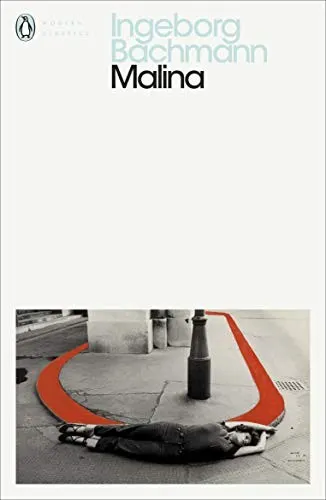
Bachmann’s only completed novel begins with a woman suspended between two men: the desired Ivan and the unnervingly composed Malina, with whom she shares a Vienna apartment. Yet this is less a love triangle than a map of a consciousness under siege. Dialogue fractures, memories intrude, and ordinary rooms acquire the pressure of sealed chambers.
Like Hedayat, Bachmann makes psychic disintegration formally seductive: repetition becomes incantation, contradictions feel truer than facts, and intimacy carries the threat of erasure. A landmark of postwar German-language literature, Malina has inspired unusually fierce devotion because it turns anguish into prose of terrifying precision. If The Blind Owl’s narrator felt less like a character than a voice trapped inside you, Malina is indispensable.
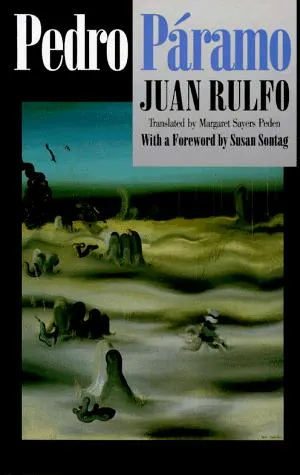
Juan Preciado travels to the town of Comala to find the father he has never known. From there, Rulfo lets voices drift across time with almost no warning: murmurs, confessions, memories and accusations gather until the town seems to be dreaming itself aloud.
The kinship with The Blind Owl lies in that uncanny collapse of boundaries—between speaker and listener, past and present, the living and whatever persists after life. But Rulfo’s prose is spare where Hedayat’s is fevered; every short sentence seems scorched clean. This tiny novel transformed Latin American fiction, and García Márquez credited it with releasing him from a creative impasse. Its influence is immense, but its real power remains intimate: Comala’s whispers continue long after the book ends.
For the reader who wants to go deeper into The Blind Owl’s most disturbing pleasure—the sense that identities, bodies and rooms are mutating together—Donoso offers a vast, baroque descent. In a decaying religious house populated by old women, servants, stories and concealed histories, a figure called Mudito moves through a world whose walls seem made of rumor.
Donoso continually changes the ground beneath you: narrators bleed into one another, grotesque folklore becomes psychological fact, and confinement produces entire alternate realities. Yet the book’s difficulty is not ornamental; its unstable form embodies terror, shame and the longing to disappear. Widely regarded as Donoso’s masterpiece and one of the darkest achievements of the Latin American Boom, it is the rare cult novel that fully earns its reputation. Reading it feels less like following a story than being swallowed by one.