Author
Books like Russell Hoban
6 books we recommend to Russell Hoban readers, drawn from Riddley Walker and The Mouse and His Child — each with the reason why.
If you loved Riddley Walker
Buccmaster, a proud and increasingly unmoored English landowner, narrates the aftermath of the Norman invasion in a “shadow tongue” built from Old English and modern vocabulary. As with Riddley’s voice, the first pages demand adjustment; then the language becomes unnervingly immediate, exposing a mind trapped inside its own myths.
Kingsnorth also understands Hoban’s grim comedy. Buccmaster is compelling, ridiculous, frightening, and sometimes painfully lucid—a would-be hero whose stories about himself keep colliding with reality. Longlisted for the Booker Prize and winner of the Gordon Burn Prize, The Wake is no dutiful historical reconstruction: it is a raw, incantatory novel about cultural collapse and the dangerous comfort of believing the past chose you personally.
Rush That Speaks grows up in Little Belaire, a community whose customs, sayings, and ideas about becoming “transparent” have survived from a world its inhabitants only partly understand. Crowley lets that culture emerge through Rush’s intimate, guileless voice, making every familiar-looking word seem to hold buried meanings.
Where Riddley Walker is charred, percussive, and suspicious, Engine Summer is luminous and tender. Yet both novels make storytelling into technology: a means of storing a person, distorting history, and speaking across an abyss. Crowley is revered by fellow writers and devoted readers for precisely this kind of intricate, emotionally delayed magic. The book feels simple until its patterns begin closing around you; afterward, its title alone can summon the ache of an entire vanished civilization.
Few novels rival Riddley Walker in making the reader learn a consciousness from the inside. Alex’s Nadsat—an exuberant slang compounded from Russian, English, and schoolboy invention—initially obstructs understanding, then implicates you: soon you comprehend his brutal world without translation and may even catch yourself enjoying the music of his speech.
That seduction is the novel’s moral mechanism. Burgess uses linguistic pleasure to unsettle easy judgments about violence, punishment, and free will, while Alex’s verbal wit keeps the book viciously alive. Kubrick’s film made it notorious, but the novel is stranger, funnier, and more philosophically exact. Anyone captivated by the moment when Riddley’s difficult language becomes indispensable should experience Burgess performing that transformation at full voltage.
If you loved The Mouse and His Child
A solitary hunter living beside the sea meets a mermaid, and Jarrell lets their encounter retain all its strangeness. His lucid, poet’s prose makes loneliness, love, and the desire for a family comprehensible to children without shrinking those feelings to a child-sized scale.
Like Hoban, Jarrell treats impossible creatures as emotionally exact beings; the enchantment only sharpens the book’s awareness of time and loss. Maurice Sendak’s illustrations deepen that mingling of homeliness and mystery. This Newbery Honor book is very short, but it leaves the spacious, lingering ache of a much larger novel.
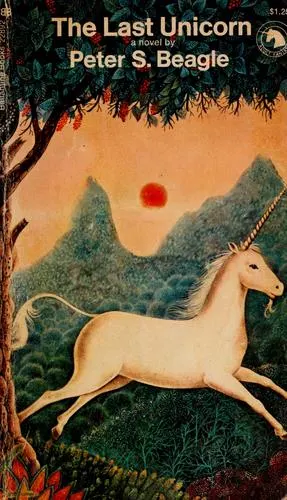
A unicorn overhears two hunters say that she may be the last of her kind and leaves her forest to learn whether it is true. From that opening, Beagle creates a quest at once comic, frightening, and piercingly melancholy.
Its closest bond with Hoban is its refusal to make innocence synonymous with ignorance. Beauty can be vain, goodness can be ineffectual, and love can carry consequences that no cheerful moral will erase. Beagle’s sly, self-aware storytelling keeps puncturing fantasy conventions without puncturing their emotional power. Its reputation as a modern fantasy classic rests on precisely this rare balance: readers remember the jokes, but they devote themselves to the sorrow.
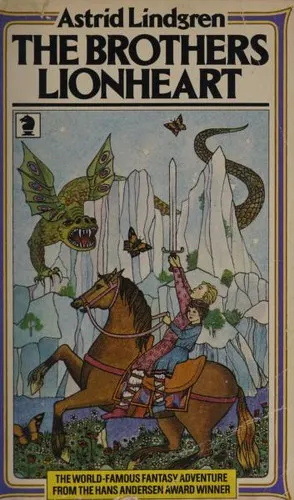
Lindgren begins with a sick child, Karl, being comforted by his adored older brother Jonathan, who tells him about Nangiyala, the country beyond death. Few children’s novels announce their stakes so plainly—or proceed with such warmth.
A lover of Hoban will recognize the moral seriousness: courage is not fearlessness, evil is not decorative, and devotion matters because the world can genuinely break what is loved. Yet Lindgren never becomes grim for grimness’s sake; the brothers’ affection gives the story radiance and momentum. Controversial when it appeared because it spoke so directly about death, it became one of Lindgren’s most fiercely cherished books. Missing it means missing one of children’s literature’s boldest acts of trust in its readers.