Author
Books like Robert Charles Wilson
4 books we recommend to Robert Charles Wilson readers, drawn from Spin and The Chronoliths — each with the reason why.
If you loved Spin
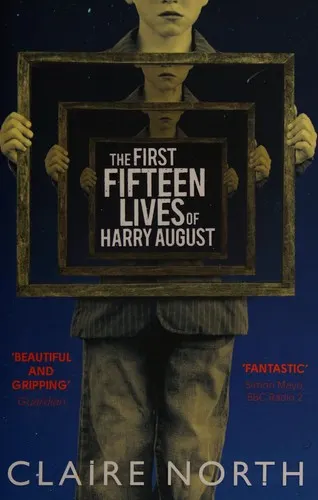
Harry August repeatedly lives the same lifetime, retaining his memories each time—until a warning delivered at his deathbed turns reincarnation into an urgent scientific problem.
Like Spin, this novel anchors a staggering temporal conceit in a complicated relationship between brilliant, damaged people. Its intellectual rivalry carries the same mixture of affection, resentment, dependence, and moral alarm that makes Tyler and Jason so compelling. North also understands that a speculative breakthrough matters most when it forces someone to decide what they owe the future. Winner of the John W. Campbell Memorial Award, it is ingenious without becoming mechanical and emotionally bruising without sacrificing momentum.
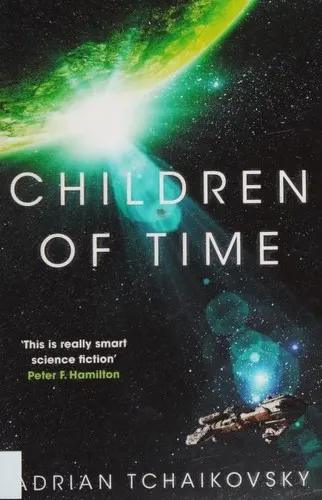
If Spin gave you vertigo by placing ordinary human history against astronomical time, Children of Time delivers that sensation on an even grander scale. A failed terraforming project and the remnants of humanity become parts of an evolutionary drama spanning millennia.
The marvel is Tchaikovsky’s ability to make scientific processes—adaptation, inheritance, cultural development—feel suspenseful and intimate. He builds genuine emotional investment in forms of intelligence radically unlike our own, while repeatedly overturning assumptions about civilization and progress. Its Arthur C. Clarke Award was richly deserved: few modern novels combine conceptual audacity, narrative drive, and immense compassion so successfully.
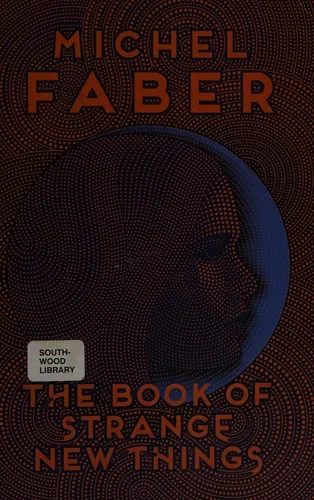
Peter, a missionary, travels to a distant world while his wife Bea remains on an increasingly unstable Earth. Their messages initially preserve the habits of marriage, but physical distance and incompatible experience begin changing what they can say—and what they can understand about each other.
This is the recommendation for readers who know Spin is ultimately as much about Tyler and Diane as it is about the Hypotheticals. Faber makes cosmic separation painfully domestic: delayed replies, evasions, private fear, and the discovery that love may not be enough to keep two realities joined. Widely admired beyond genre circles, the novel possesses the rare speculative-fiction gift Spin has at its best: it makes the fate of worlds feel less abstract than one unanswered message from home.
If you loved The Chronoliths
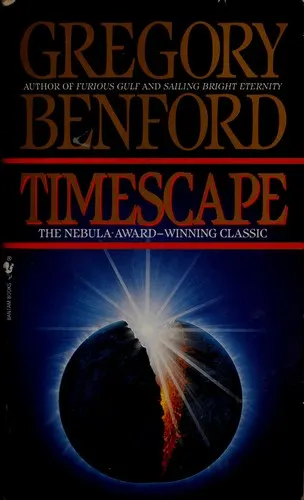
Timescape treats communication across time not as a magic trick but as a dangerous scientific problem. In a deteriorating near future, researchers attempt to warn the past; decades earlier, physicists struggle to interpret anomalous experimental results. Benford makes laboratories, academic rivalries, institutional skepticism, and domestic strain integral to the suspense.
That patient realism is exactly what gives the novel its Chronoliths-like unease: knowledge of the future does not simply solve problems—it alters motives, expectations, and perhaps the conditions that produced the knowledge at all. A Nebula Award winner and a landmark of hard science fiction, Timescape proves that rigorous ideas can generate dread as effectively as any thriller.