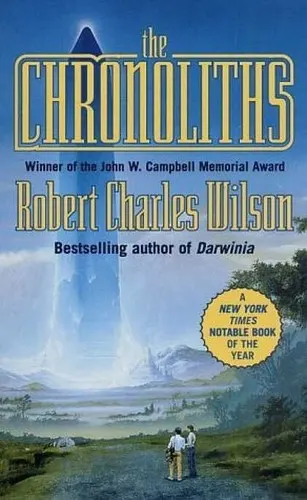
Books like The Chronoliths
Reading The Chronoliths feels like watching history acquire physical weight: public awe and panic spread outward while one damaged family tries to live beneath the shadow. Its grand temporal puzzle matters because Wilson makes causality intimate—something that can deform loyalties, marriages, and the stories people tell about themselves.
If you liked The Chronoliths, you’ll love these
Not lookalikes — kindred books. Each one shares something essential with The Chronoliths, and we tell you exactly what.
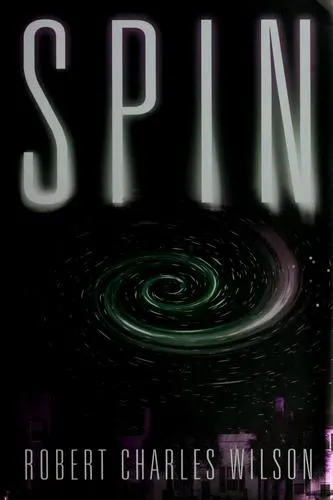
Wilson perfects the distinctive balance that makes The Chronoliths so haunting: an impossible event on a planetary scale, examined through the fragile bonds among ordinary people. When the stars abruptly vanish, three childhood friends respond with scientific obsession, religious conviction, and watchful uncertainty. The mystery is enormous, but the emotional engine is the narrator’s devotion to people he may never fully understand.
Spin won the Hugo Award, and deservedly remains Wilson’s defining novel. Its cosmic revelations are exhilarating, yet its real power lies in the way history’s pressure exposes love, resentment, privilege, and self-deception. If The Chronoliths left you wanting another catastrophe that grows more human as it grows more immense, missing Spin would mean missing Wilson at his peak.
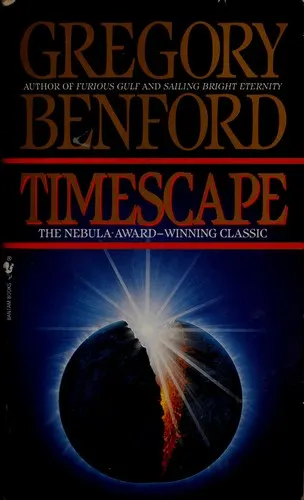
Timescape treats communication across time not as a magic trick but as a dangerous scientific problem. In a deteriorating near future, researchers attempt to warn the past; decades earlier, physicists struggle to interpret anomalous experimental results. Benford makes laboratories, academic rivalries, institutional skepticism, and domestic strain integral to the suspense.
That patient realism is exactly what gives the novel its Chronoliths-like unease: knowledge of the future does not simply solve problems—it alters motives, expectations, and perhaps the conditions that produced the knowledge at all. A Nebula Award winner and a landmark of hard science fiction, Timescape proves that rigorous ideas can generate dread as effectively as any thriller.
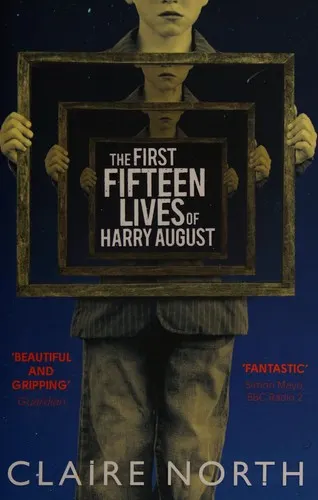
Harry August repeatedly lives the same life, retaining his memories each time. Then, near the end of one life, a child brings him a message passed backward through generations of people like him: the world is ending sooner, and someone is accelerating the process.
What follows has the intellectual charge a Chronoliths reader will recognize—history becomes contested territory, foreknowledge becomes political power, and causality begins to resemble a struggle between personalities. But Claire North’s sharpest creation is the relationship at its center: an alliance shaped by fascination, rivalry, affection, and profound moral disagreement. Winner of the John W. Campbell Memorial Award, this is a compulsively readable novel in which saving civilization may depend on understanding one dangerously persuasive person.