Author
Books like Paul Lynch
3 books we recommend to Paul Lynch readers, drawn from Prophet Song — each with the reason why.
If you loved Prophet Song
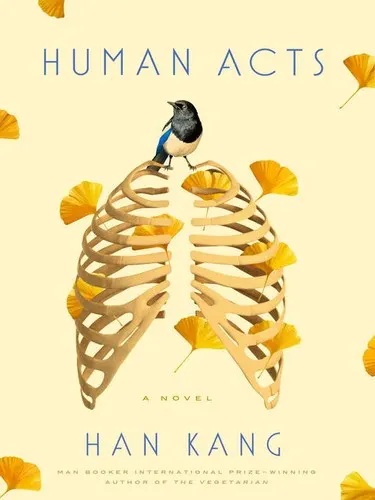
Han Kang’s novel begins amid the 1980 Gwangju uprising, where a boy searches for a friend while state violence turns familiar streets into places of terror. Like Lynch, Han understands authoritarianism not as an abstract political development but as an assault on bodies, families, memory, and language itself.
Yet Human Acts achieves its force differently. Its shifting voices carry one atrocity through survivors, mourners, and the dead, making remembrance feel like both a wound and a duty. Han’s prose—spare, lucid, almost unbearably tender—has the same capacity as Lynch’s to make beauty intensify horror rather than soften it. Written by the future Nobel laureate, this is among her most revered novels: a brief book with the moral and emotional weight of a monument.
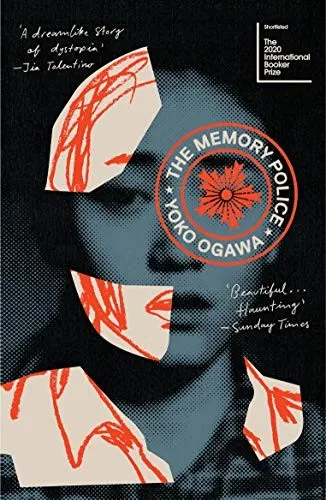
On an unnamed island, objects periodically disappear—and soon even the memory of them is forbidden. Ogawa renders this sinister premise in a hushed, dreamlike register: coercion enters daily life so quietly that people begin adapting before they fully understand what they have surrendered.
A reader gripped by the incremental constriction of Prophet Song will recognize that terrible rhythm. Rooms, possessions, habits, and private loyalties acquire political significance; small acts of care become forms of resistance. But Ogawa’s menace is eerily delicate rather than headlong, creating an allegory about censorship, grief, and the fragility of inner freedom. Long admired in Japan and later shortlisted for the International Booker Prize, The Memory Police has become a modern classic because its calmness makes it impossible to dismiss as mere dystopian fantasy.
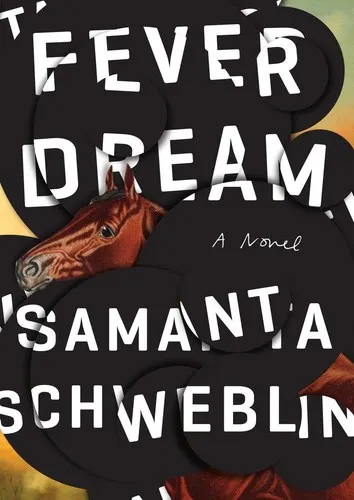
Fever Dream opens as an urgent conversation: a sick woman and a strange boy try to reconstruct what has happened, circling details with the insistence of an interrogation. Its central idea is the “rescue distance”—the constantly recalculated space between a mother and the child she must be ready to save. Few novels capture parental vigilance and helplessness with such physical accuracy.
Schweblin replaces Lynch’s political machinery with environmental and psychological threat, but the reading experience has comparable velocity: every sentence tightens the trap, and uncertainty becomes more frightening than explanation. Megan McDowell’s translation preserves prose so taut that the novel seems to happen in one sustained breath. An International Booker finalist with an intensely devoted readership, it is tiny, formally daring, and liable to remain in your nervous system long after you finish it.