Author
Books like Ousmane Sembène
5 books we recommend to Ousmane Sembène readers, drawn from God's Bits of Wood and Xala — each with the reason why.
If you loved God's Bits of Wood
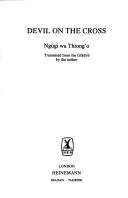
Ngũgĩ matches Sembène’s political urgency but exchanges sober realism for savage comedy. Wariinga, a young woman battered by exploitation, joins a crowded matatu journey toward a grotesque “feast” where Kenya’s elite boast of their skill at enriching themselves. The premise becomes an outrageous popular theatre of greed, full of songs, speeches, arguments, and audience interruptions.
Like Penda and the women marchers in God's Bits of Wood, Wariinga refuses the role society has assigned her. Ngũgĩ makes her awakening inseparable from the larger struggle of workers and the dispossessed, while remaining alert to sexism within supposedly liberating politics. Written in Gikuyu while Ngũgĩ was imprisoned, famously on prison-issued paper, the novel is both a landmark of African-language literature and a wonderfully unruly reading experience. Its satire does not merely denounce power; it gives resistance a voice you can hear.
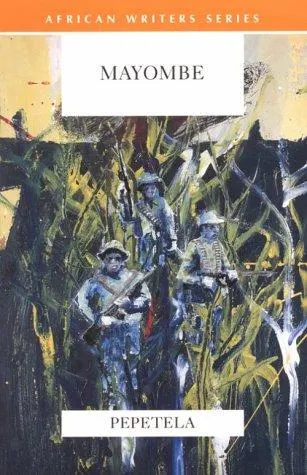
In Mayombe, a band of Angolan guerrillas fights Portuguese colonial rule from the dense Cabinda forest. Yet Pepetela—himself a veteran of the liberation struggle—refuses to manufacture spotless heroes. The fighters contend with hunger, fear, ambition, tribal distrust, ideological disagreement, and the dangerous distance between revolutionary slogans and actual human beings.
What will grip a Sembène reader is the novel’s polyphony. Individual combatants repeatedly seize the narration to revise, contradict, or expose the official account, so that the revolution belongs to no single spokesman. The result has the same bracing quality as God's Bits of Wood: solidarity is necessary precisely because it is difficult. Now regarded as a foundational Angolan novel, Mayombe preserves liberation’s grandeur without concealing its fractures. Few books examine revolutionary comradeship with such intimacy or honesty.
On Calvary Hill, a poor Trinidadian neighborhood, Carnival allows people to remake themselves in music, costume, and dance. At its center is Aldrick, who inhabits the role of the dragon with magnificent intensity. Lovelace gradually asks what happens when the performance of defiance is no longer enough—when pride must become a way of living rather than a yearly spectacle.
The kinship with Sembène lies in Lovelace’s treatment of community as protagonist. Street-corner talk, rivalry, desire, ritual, and disappointment accumulate into a portrait in which every private choice carries social weight. His Creole-inflected prose has the pulse of communal speech, while the women see through the men’s heroic poses with especially sharp intelligence. A landmark of Caribbean fiction, The Dragon Can’t Dance is beloved because its people are never reduced to symbols: their thwarted longing for dignity becomes unforgettable.
If you loved Xala

Sow Fall shares Sembène’s gift for building a ruthless social comedy from one beautifully simple reversal. When officials decide that beggars are spoiling their city’s modern image, the unwanted discover how indispensable they are to the very people who despise them.
Like Xala, this short Senegalese novel exposes status, piety, bureaucracy, and ambition as mutually reinforcing performances. Its satire is nimble rather than sermonizing, and every attempt by the powerful to control appearances tightens the trap around them. A landmark of Francophone African literature, it deserves to be read beside Xala: few novels dispatch hypocrisy with such economy or such wicked pleasure.
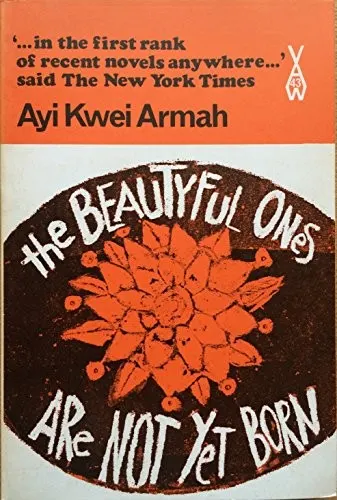
Armah offers the darker, more intimate counterpart to Sembène’s comedy. An unnamed railway clerk in newly independent Ghana tries to resist the bribery surrounding him, while corruption seems to seep into walls, buses, offices, and bodies. The prose makes political decay almost physically palpable—slime, rot, sweat, and refuse become the texture of betrayed national hope.
Where Xala humiliates the elite through farce, Armah asks what their world does to someone who refuses to join them. First published in 1968, the novel remains an enduring classic of post-independence disillusionment because its moral pressure never becomes simple: integrity can look like cowardice, compromise like ordinary survival. Readers who value the bodily symbolism and unsparing anger beneath Xala’s laughter should not miss this bracing masterpiece.