Author
Books like Nick Harkaway
6 books we recommend to Nick Harkaway readers, drawn from The Gone-Away World and Gnomon — each with the reason why.
If you loved The Gone-Away World
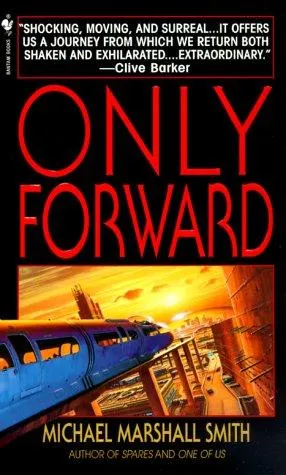
Stark is a wisecracking fixer in a city whose neighborhoods embody different ways of living; a missing-person job sends him beyond its comfortable strangeness. Smith writes with the same exhilarating refusal to choose between noir, speculative fiction, slapstick, and metaphysical inquiry.
More importantly, Only Forward shares Harkaway’s hidden gravity. Its bravado and surreal invention gradually reveal an unusually tender concern with friendship, memory, and what one person owes another. Winner of both the August Derleth and Philip K. Dick awards, it has become a fiercely cherished cult novel—and few books better reproduce the sensation of laughing through a story until it suddenly reaches somewhere painfully human.
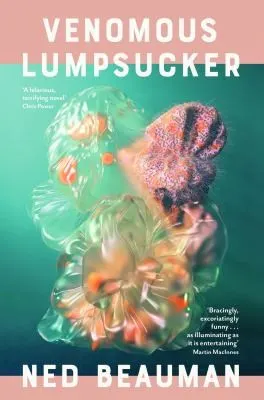
In Beauman’s near future, companies can offset the extinction of species as if balancing a spreadsheet. When an exceptionally intelligent fish may have vanished, an extinction expert and a corporate operator are forced into an increasingly grotesque reckoning.
The kinship lies in Beauman’s ability to turn systems into comedy without treating their consequences as a joke. Like Harkaway, he delights in jargon, perverse incentives, technological fixes that generate stranger disasters, and arguments that remain thrilling because they are attached to urgent action. The novel’s Arthur C. Clarke Award was well earned: it is viciously funny, intellectually ravenous, and alarmingly plausible—the kind of satire that leaves the real world looking less realistic than the fiction.
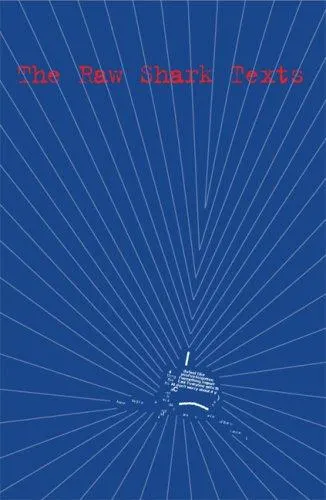
Eric Sanderson wakes without his memories and begins receiving letters from the person he used to be. Their warnings introduce a danger that exists in language, thought, and information—and Hall makes that premise tangible with some of the most audacious visual and typographical set pieces in contemporary fiction.
Where The Gone-Away World gives abstractions physical force, Hall makes reading itself feel hazardous. Yet beneath the conceptual bravura is a story powered by grief, love, identity, and the desperate wish to recover a vanished self. The Raw Shark Texts earned a devoted cult readership because its formal tricks are not decorations: they become genuine suspense and emotion. It is one of those rare novels whose readers want to press it into other people’s hands simply to have someone else experience what it does.
If you loved Gnomon
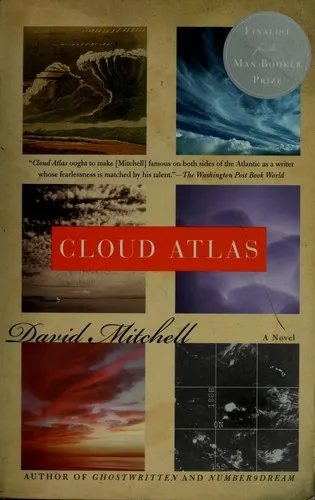
Mitchell’s six narratives nest inside one another like stories dreaming other stories, moving through radically different voices and genres. The virtuosity is exhilarating, but—as in Gnomon—the architecture is not decorative. Each narrative changes how you understand the others, until questions about power, exploitation and human connection begin echoing across the entire book.
Shortlisted for the Booker Prize and now a touchstone for intricately constructed fiction, Cloud Atlas earns its reputation through sheer rereadability: once you know its shape, you want to enter it again and notice every hidden rhyme. Anyone who loved surrendering to Gnomon’s proliferating identities should experience Mitchell’s humane, ferociously controlled masterpiece.
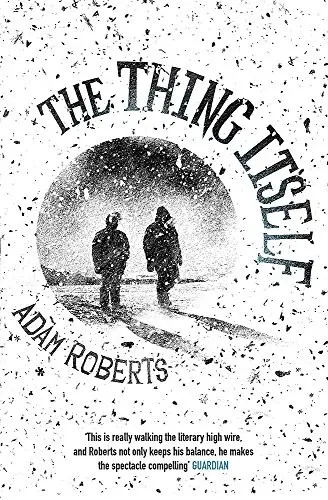
Two men at an Antarctic research station argue about Kant, reality and whether the universe exists independently of human perception. Then Roberts starts breaking open the conventions of the novel itself.
The Thing Itself shares Gnomon’s appetite for philosophy, artificial intelligence and ontological vertigo, along with its refusal to separate serious ideas from genre pleasure. Roberts jumps between periods and literary styles with mischievous confidence, repeatedly forcing the reader to reconsider what kind of story is being told. Yet beneath the cleverness lies a moving concern with loneliness, guilt and the limits of consciousness. It is one of contemporary British science fiction’s great under-read feats of invention.
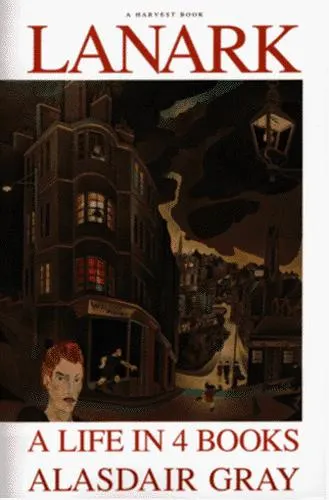
Lanark begins with an uncertain young man in the nightmarish city of Unthank, where identity, memory and even bodily reality seem unstable. From there, Gray builds a novel that is simultaneously dystopian fantasy, autobiographical Künstlerroman, political satire and argument with its own author.
What will feel familiar is the sensation that every apparent level of the fiction may be concealing another mechanism. Gray uses dislocation, metafiction and visual design not as games for their own sake, but to examine how cities, institutions and private failures deform a life. First published in 1981, Lanark became a landmark of Scottish literature and influenced generations of formally adventurous novelists. Its strange authority only grows: miss it, and you miss one of the crucial ancestors of novels like Gnomon.