Author
Books like N. K. Jemisin
6 books we recommend to N. K. Jemisin readers, drawn from The Fifth Season and The Hundred Thousand Kingdoms — each with the reason why.
If you loved The Fifth Season
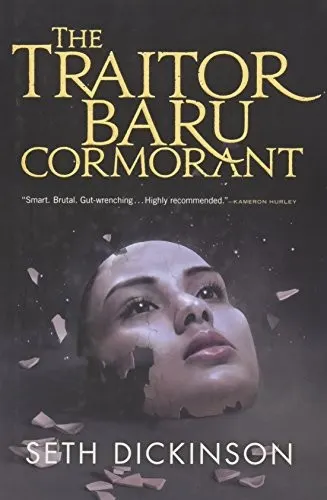
Baru’s homeland is conquered not chiefly by armies but by currency, schools, medicine, and laws that redefine her family as immoral. Determined to defeat the empire from within, she enters its civil service and discovers that understanding a monstrous system can make you dangerously useful to it.
Like Jemisin, Dickinson turns oppression into machinery rather than backdrop. His heroine is brilliant, furious, compromised, and forced to calculate what intimacy costs under a regime that weaponizes it. The novel’s reputation for leaving readers emotionally wrecked is thoroughly earned: its political intelligence sharpens, rather than softens, its heartbreak.
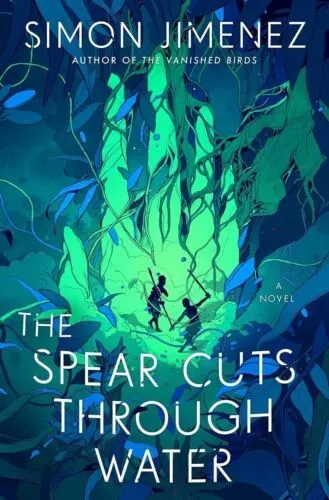
Two warriors escort a fallen moon across a country ruled by immortal tyrants—but that simple outline cannot capture the experience of reading this astonishing novel. Its story moves through myth, theatrical performance, memory, and direct address; perspectives slip between bodies and generations with an audacity that will thrill anyone captivated by Jemisin’s structural revelations.
Jimenez pairs ferocious violence with startling tenderness, making resistance feel both legendary and bodily immediate. The book has inspired unusually passionate devotion because its formal invention never becomes mere display: every narrative layer asks who inherits suffering, who tells history, and how love survives inside brutality. It is one of contemporary fantasy’s genuine feats of storytelling.
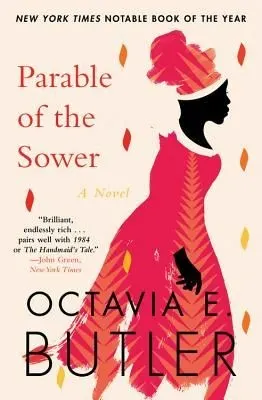
Lauren Olamina grows up behind walls in a California collapsing under climate disaster, inequality, privatized violence, and civic abandonment. She also lives with hyperempathy, experiencing other people’s pain in her own body—a condition that makes brutality impossible to treat as an abstraction.
Butler shares Jemisin’s unsentimental clarity about catastrophe: disaster exposes existing injustice long before it creates anything new. Yet Lauren’s fierce practicality and evolving vision prevent the novel from becoming an exercise in despair. Once regarded as chillingly prescient, it is now firmly established as a modern classic; its urgency has only intensified as reality has caught up with it. Few novels make survival, community, and radical change feel so inseparable.
If you loved The Hundred Thousand Kingdoms
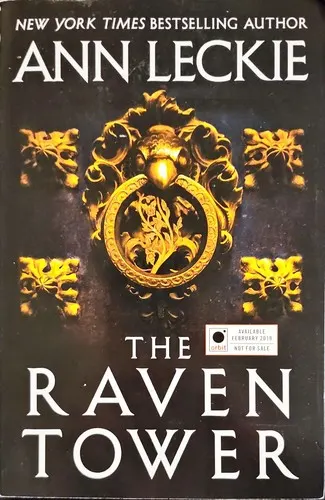
If you loved Jemisin’s gods as volatile people rather than distant mythology, read this. A god narrates, addressing Eolo, an aide who has returned home to find a ruler missing and the succession disturbed. Leckie gives divinity exacting rules: a god’s words can alter reality, but truth carries a cost. Theology consequently becomes character, strategy, and suspense all at once.
Like Yeine, Eolo enters a court whose customs conceal lethal struggles over legitimacy. Yet Leckie—author of the landmark, award-sweeping Ancillary Justice—builds a stranger and more austere book, with second-person narration and the patient menace of an ancient intelligence. Few fantasies think so rigorously about what a god’s power would do to language, politics, and personality.
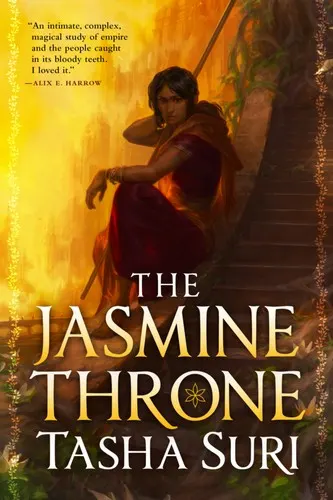
Malini, an imperial princess, has been imprisoned in a ruined temple by her brother. Priya, one of the servants attending her, carries dangerous loyalties and a past bound to that place. Their wary attraction develops inside a contest over empire, faith, and who is permitted to wield sacred power.
A reader captivated by Yeine’s combination of political vulnerability and fierce desire will recognize the charge here: intimacy is never separate from leverage, and apparently powerless women are continually judging what they can risk revealing. Suri also shares Jemisin’s gift for exposing the violence beneath official cosmologies. Winner of the World Fantasy Award, The Jasmine Throne is lush without becoming soft, romantic without surrendering its moral complexity, and large enough to make every private choice reverberate through an empire.
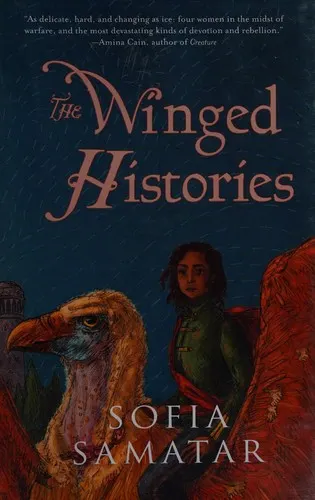
Sofia Samatar tells an imperial war through four women—a soldier, a scholar’s daughter, a poet, and a socialite—whose lives expose different meanings hidden inside the same history. Instead of presenting empire as a chessboard viewed from above, she lets it fracture into memory, scripture, song, family grievance, and longing.
That makes this an especially rich match for readers who loved how Yeine’s personal voice contests the official story of the Arameri and their gods. Samatar’s prose is more intricate and incantatory than Jemisin’s, but it produces the same crucial effect: conquered peoples and disregarded women cease to be background figures in someone else’s legend. The Winged Histories is one of those singular fantasies whose admirers speak of it with near-protective devotion; its beauty is inseparable from its fury, and once read, its voices are difficult to forget.