Author
Books like Murasaki Shikibu
3 books we recommend to Murasaki Shikibu readers, drawn from The Tale of Genji — each with the reason why.
If you loved The Tale of Genji
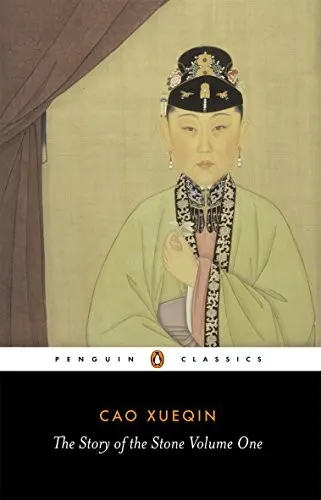
This is Genji’s nearest equal in its union of intimate psychology, social vastness, and elegiac beauty. Within a magnificent but declining household, Cao follows a sensitive young heir and the brilliant, sharply differentiated women around him; flirtation, jealousy, illness, poetry, and family ceremony gradually disclose an entire civilization’s emotional structure.
Like Murasaki, Cao understands that privilege does not protect anyone from impermanence—it merely gives loss more exquisite forms. Clothes, gardens, jokes, gifts, and literary games matter because they register changes the characters cannot yet name. One of China’s Four Great Classical Novels, it has inspired an entire scholarly discipline, “Redology,” yet its deepest appeal remains personal: readers fall in love with its household so completely that its fragility begins to feel like their own.
Proust offers the same astonishing reward as Genji: the discovery that social life, apparently made of trivial visits and attractions, contains inexhaustible depths. His narrator watches desire turn into jealousy, prestige alter perception, and tiny gestures betray what polished conversation conceals. A salon entrance can be as consequential as a battle because Proust, like Murasaki, sees consciousness itself as the true field of action.
The sentences are longer and more analytical, but their movement is similarly tidal: comedy, cruelty, sensuality, and grief continually flow into one another. Few novels have changed how later writers represent memory and time so profoundly. To miss Proust is to miss perhaps the grandest Western counterpart to Genji’s insight that we understand our lives only after they have already become irrecoverable.
Tanizaki makes family negotiation feel suspenseful without sacrificing delicacy. Four sisters from a once-prosperous Osaka family must navigate marriage prospects, reputation, money, and competing ideas of refinement. Each sister’s smallest choice disturbs the household balance, and Tanizaki renders their differences with the patient, nonjudgmental intimacy that makes Genji’s women so memorable.
What begins as an elegant domestic chronicle becomes a profound portrait of a social world trying to preserve its rituals while history quietly overtakes it. Cherry-blossom outings, fabrics, letters, illnesses, and awkward meetings accumulate into an atmosphere of almost unbearable transience. Widely regarded as Tanizaki’s masterpiece, it is not simply beautiful; it creates the peculiar ache of having lived for years among people whose habits you once found amusing and now cannot bear to lose.