Author
Books like Malcolm Lowry
3 books we recommend to Malcolm Lowry readers, drawn from Under the Volcano — each with the reason why.
If you loved Under the Volcano
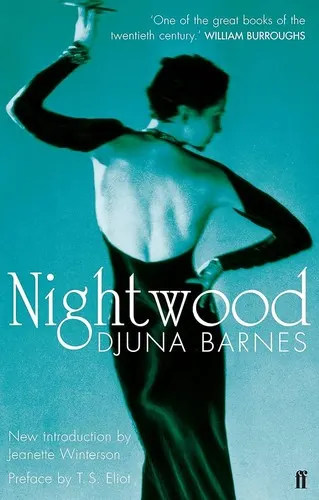
For the incantatory side of Lowry, read Nightwood. Barnes’s sentences have the same nocturnal density: ornate yet exact, full of religious echoes, grotesque comedy, and sudden shafts of grief. Its damaged lovers circle one another through a Europe of bars, bedrooms, churches, and confessions, while the unforgettable Dr. Matthew O’Connor talks in extravagant monologues that mingle gutter wit with apocalyptic sorrow.
Like Under the Volcano, it is less a story you follow than a climate you enter. Desire becomes fate; conversation becomes metaphysics. Long established as a modernist classic, Nightwood has inspired unusually fierce devotion because no other novel sounds quite like it. If Lowry’s language made damnation feel lyrical, Barnes’s will feel like discovering its midnight liturgy.

Exley approaches self-destruction without Lowry’s symbolism, but with an equally unnerving mixture of comedy, vanity, lucidity, and shame. Presented as a “fictional memoir,” the novel follows a man who can diagnose his failures brilliantly while remaining almost helpless to stop repeating them. His voice swings from barroom bravado to ruthless self-exposure, often within a paragraph.
A reader who loves the Consul’s terrible intelligence will recognize the central paradox: self-knowledge is not salvation. Exley also shares Lowry’s gift for making collapse horribly funny, and for showing how private defeat absorbs the myths of an entire culture. A cult classic since its 1968 publication, A Fan’s Notes is one of those books readers press on friends with evangelical urgency. Its comedy makes it approachable; its honesty makes it hard to shake.

Malina begins with an unnamed woman writer in Vienna trying to locate herself between two men: the desired Ivan and the composed, enigmatic Malina. But ordinary coordinates soon become unstable. Letters, dialogues, fairy tales, interviews, and dream records interrupt the narrative as language itself begins registering pressures that conventional realism cannot contain.
This is the recommendation for readers who experienced Under the Volcano as a spiritual and linguistic inferno. Bachmann likewise turns psychic fracture into architecture: rooms, voices, memories, and historical violence overlap until inner life feels both intensely private and politically haunted. Her only completed novel, Malina is a landmark of postwar German-language literature and feminist modernism. It is severe, hypnotic, and inexhaustible—the kind of book that does not merely describe a consciousness in crisis but temporarily replaces yours with it.