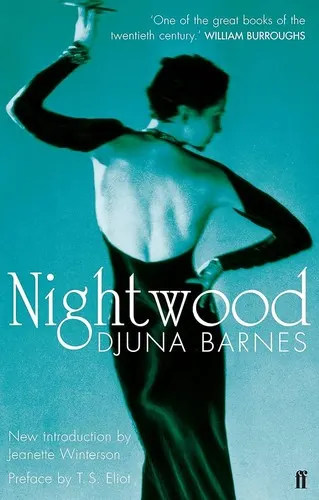
Books like Nightwood
Reading Nightwood feels like entering a candlelit room where desire has stayed awake too long: every sentence glitters, wounds, philosophizes, and threatens to become a spell. These novels match its intensity without merely reproducing its scenery.
If you liked Nightwood, you’ll love these
Not lookalikes — kindred books. Each one shares something essential with Nightwood, and we tell you exactly what.
A woman enters her maid’s nearly empty room and undergoes an encounter that strips away her ordinary sense of self. From that stark opening, Lispector builds one of modern fiction’s most unsettling spiritual ordeals.
Like Barnes, she makes thought physical: metaphysics arrives through disgust, appetite, dread, and rapture. Her sentences do not describe a crisis from a safe distance; they enact it, circling what language can barely contain. Widely regarded as Lispector’s masterpiece, this is essential for anyone who loved Nightwood’s fusion of bodily abasement and ecstatic revelation.
Smart turns a disastrous love affair into a sustained prose incantation. Biblical cadences, weather, overheard speech, and raw jealousy rush together until emotion seems to have rewritten the physical world.
Where Nightwood gives doomed desire a baroque nocturnal eloquence, Smart makes it burn with prophetic certainty. The book’s cult reputation rests on precisely this refusal of moderation: it is extravagant, self-lacerating, and embarrassingly sincere in the best sense. Few novels understand so completely that beautiful language cannot cure obsession—and may instead become its most intoxicating instrument.
At a seaside ball, Lol Stein watches the man she expects to marry become absorbed by another woman. Duras then approaches Lol’s inner life through gaps, repetitions, conjectures, and charged silences, making absence itself feel like a form of possession.
Her style is nearly the inverse of Barnes’s—cool, spare, hypnotically controlled—but the emotional territory is uncannily close: erotic displacement, unstable identity, and the strange theatricality of suffering. The novel has fascinated generations of writers and theorists; Jacques Lacan famously wrote in homage to it. Read it and you discover how little prose needs to say before desire becomes bottomless.