Author
Books like Lois McMaster Bujold
8 books we recommend to Lois McMaster Bujold readers, drawn from The Curse of Chalion, Paladin of Souls and A Civil Campaign — each with the reason why.
If you loved The Curse of Chalion
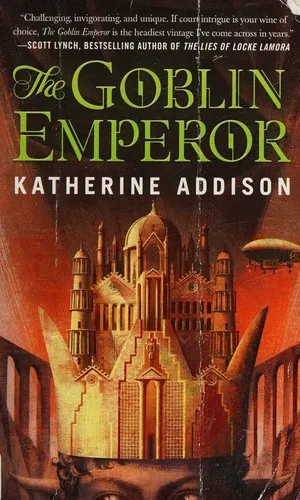
Maia has been raised in neglect, far from court, when an unexpected death makes him emperor. He arrives among people who know every rule he does not—and many who expect to profit from his failure.
The kinship with Chalion lies in its conviction that decency is not passivity. Like Cazaril, Maia survives by observing closely, treating supposedly unimportant people as fully human, and refusing to let humiliation make him cruel. Addison makes etiquette, appointments, and audiences genuinely suspenseful because every small choice reveals what kind of ruler Maia will become. A Locus Award winner and an enduring comfort read for many fantasy readers, it offers the same deeply satisfying spectacle of gentleness becoming political strength.
If Cazaril’s exhaustion, competence, and instinct for self-effacing service mattered most to you, meet Cliopher Mdang. He is the emperor’s chief bureaucrat, a middle-aged man who has helped rebuild the world yet remains separated from his sovereign by ceremony—and from his family by everything he cannot explain about his work.
Goddard turns administrative labor into an epic of friendship and recognition. Its pleasures accumulate patiently: impossible reforms achieved, rigid protocol quietly breached, and two profoundly lonely men learning to see one another. The novel is enormous because it grants emotional consequences the space most fantasies reserve for battles. Its fiercely devoted word-of-mouth readership understands that this is not merely cozy competence fantasy; it is a moving argument that service deserves to be seen, and that even those who carry kingdoms are allowed to want a home.
If you loved Paladin of Souls
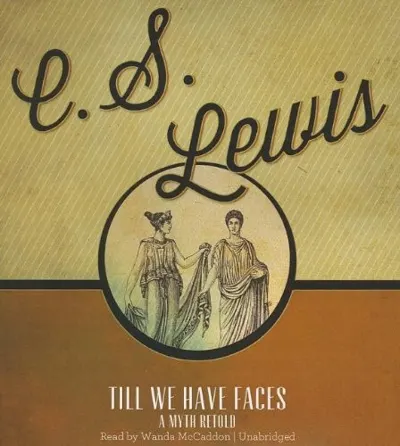
The elderly queen Orual writes an accusation against the gods, demanding that they answer for what they have taken from her. Like Ista, she is intelligent, furious, politically capable, and unwilling to accept pious evasions; both women discover that divine attention can be terrifyingly personal.
Lewis’s retelling of Cupid and Psyche is austere where Bujold is witty, but it shares her fascination with vocation, self-deception, possessive love, and the cost of seeing clearly. Often regarded as Lewis’s finest novel, it gives its difficult heroine a spiritual and psychological depth that makes Orual hard to forget.
What Bujold does with Ista’s widowhood, Le Guin does with Tenar’s life after being priestess, farmwife, and mother: she asks what remains when every identity assigned to a woman has been used up. On the island of Gont, Tenar takes in a terribly injured child and confronts a culture whose celebrated magic has excluded much of women’s experience.
This Nebula-winning Earthsea novel finds power in domestic labor, endurance, anger, and late tenderness without sentimentalizing any of them. Its rethinking of heroism and its respect for an older woman’s still-unfolding life make it an extraordinary companion to Paladin of Souls. It is best read after the first three Earthsea books—and is worth that entire journey.
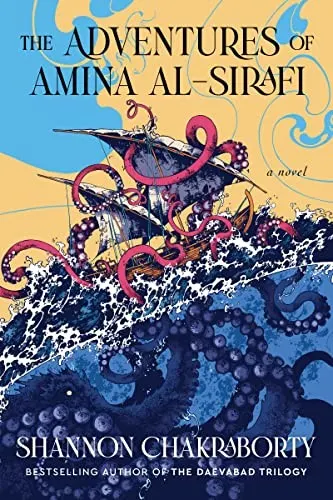
Amina al-Sirafi is a retired pirate, a mother, and a woman whose knees now object to the exploits that made her famous. When an irresistible final commission pulls her back to sea, her competence, appetites, regrets, and gloriously dry voice take command of the book.
Like Ista, Amina refuses the idea that maturity should mean quiet disappearance. Her Muslim faith remains morally serious even as she encounters marvels and horrors, while motherhood complicates rather than erases her hunger for danger and achievement. This Hugo finalist combines supernatural adventure with the rarer pleasure of watching an experienced woman reclaim the unruly parts of herself.
If you loved A Civil Campaign

A time-lagged historian is sent to Victorian England to locate a missing object, only to encounter an equally resourceful colleague, a formidable matriarch, several romantic entanglements, and a chronology that may be coming apart. Like Bujold, Willis turns a rigorously imagined system into a farce: every misplaced object, misunderstood instruction, and well-meant intervention acquires terrifying consequences.
The delight lies in watching intelligent people improvise while manners prevent them from saying what they mean. The romance develops through shared competence, and the comic plotting snaps together with the satisfaction of an engineered device. Winner of both the Hugo and Locus awards, it is one of science fiction’s great romantic comedies—and perhaps the closest thing to experiencing A Civil Campaign’s dinner-party exhilaration for the first time again.
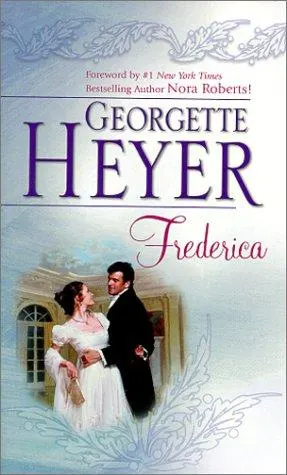
Frederica Merriville approaches the rich, bored Marquess of Alverstoke with a practical request: help launch her beautiful sister into society. He agrees largely for his own amusement, not anticipating Frederica’s intelligence, her refusal to flatter him, or the disruptive ingenuity of her younger brothers.
This is a superb match for readers who love Bujold’s belief that romance reveals character through action. Affection grows through errands, emergencies, family management, and the discovery that competence can be more seductive than glamour. Heyer’s social world operates by rules as exacting as Vor aristocracy, while new technologies and unruly children repeatedly overwhelm elegant plans. Long cherished as one of Heyer’s warmest and funniest novels, Frederica offers a hero whose transformation is both comic comeuppance and genuine moral awakening.
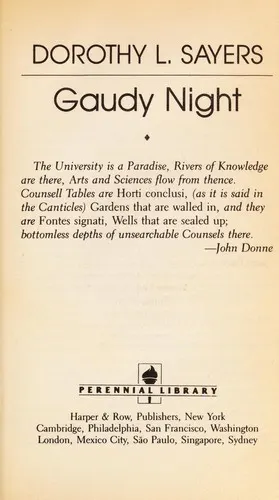
Harriet Vane returns to her former Oxford college and finds its scholarly community threatened by anonymous letters and escalating acts of malice. At the same time, she must reconsider the persistent courtship of Lord Peter Wimsey: a brilliant aristocrat who can solve almost anything except how to love her without diminishing her freedom.
What links it to A Civil Campaign is the seriousness beneath the comedy of manners. Both novels ask whether love can survive differences of power, reputation, vocation, and class—and insist that a happy ending must preserve the woman’s full intellectual and moral independence. Peter’s necessary lesson in restraint strongly echoes Miles’s, while Harriet has Ekaterin’s determination to choose rather than be maneuvered.
A landmark of Golden Age detective fiction, Gaudy Night has inspired unusual devotion for its fusion of mystery, university politics, and adult courtship. It stands alone, though its emotional force deepens after Strong Poison and Have His Carcase—much as Bujold’s comedy becomes richer when one knows everything its characters have endured.