Author
Books like Karin Tidbeck
3 books we recommend to Karin Tidbeck readers, drawn from Amatka — each with the reason why.
If you loved Amatka

On an unnamed island, things periodically vanish—not only from daily life but from most people’s memories—and an impassive police force ensures that no illicit remnants survive. A novelist who can still remember shelters her editor, whose resistance to forgetting makes him dangerous.
Like Amatka, this is a dystopia built from absences, routines, and quiet complicity rather than spectacle. Ogawa’s lucid prose lets each disappearance register as both an impossible alteration of reality and an intimate bereavement. An International Booker finalist, the novel has earned lasting devotion because its gentleness never softens its horror. If Amatka made you feel that private attention could be a form of rebellion, The Memory Police is indispensable.
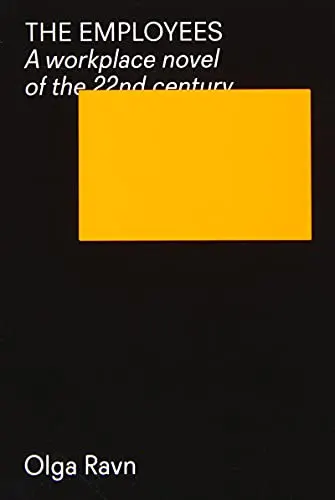
Ravn constructs this extraordinary short novel from workplace statements given by the human and humanoid crew of the Six-Thousand Ship. Their assignments concern a collection of strange objects, but their testimonies soon circle longing, embodiment, productivity, homesickness, and the question of who gets treated as a person.
The bureaucratic forms are chillingly funny: management wants usable data, while the employees keep producing poetry, grief, and desire. That collision will feel immediately legible to an Amatka reader, as will the unsettling sense that matter has intentions language cannot safely contain. Shortlisted for the International Booker Prize, The Employees is only about 130 pages, yet it leaves behind the imaginative residue of a much larger book.
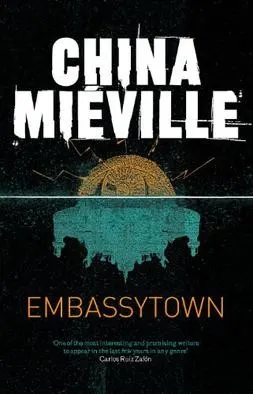
On a distant world, the indigenous Ariekei speak a Language that requires two voices and admits no separation between words and reality: they cannot casually lie or invent metaphors, and human beings may have to become literal events before they can become figures of speech. Avice Benner Cho, once made into such a simile, returns to the city where she grew up.
Where Tidbeck is spare and claustrophobic, Miéville is baroque, cerebral, and exuberantly alien—but both take the dangerous proposition that language does not merely describe the world. The Locus Award–winning Embassytown turns linguistics into drama without reducing it to a clever puzzle; its ideas acquire bodily, social, and emotional consequences. Read it to encounter the grander, wilder cousin of Amatka’s central terror: what happens when words cease to hold reality in the expected way.