Author
Books like Justin Torres
3 books we recommend to Justin Torres readers, drawn from Blackouts — each with the reason why.
If you loved Blackouts
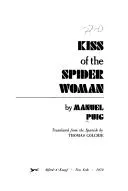
In an Argentine prison cell, Molina recounts movies to his cellmate Valentín, and storytelling becomes seduction, refuge, argument, and self-creation. Like Torres, Puig lets intimacy emerge through voices rather than conventional narration; he also interrupts those voices with pseudo-scholarly accounts of homosexuality whose cold authority is quietly exposed as grotesquely inadequate.
Puig’s internationally celebrated masterpiece is playful without being frivolous and politically alert without flattening its characters into symbols. Its deepest kinship with Blackouts lies in the conviction that retelling a story—badly remembered, embellished, stolen from hostile sources—can restore a life that official language has distorted.
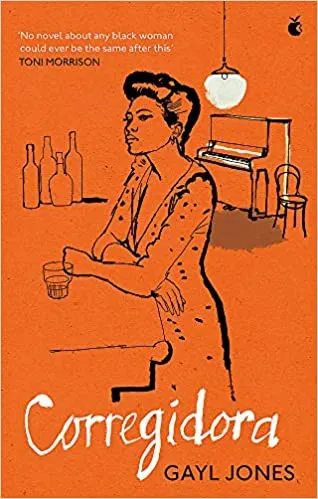
Gayl Jones’s ferocious first novel asks what happens when history survives not in trustworthy documents but in bodies, family commands, repeated stories, and damaged desire. Its protagonist, blues singer Ursa Corregidora, has been raised to preserve testimony that slaveholders tried to erase. Yet Jones refuses to make remembrance morally simple: inheritance can sustain the truth while also injuring the person made to carry it.
Toni Morrison championed Jones’s debut, and its reputation has only grown; today it is recognized as a landmark of American modernism and Black feminist fiction. Readers drawn to the missing records and ethically charged acts of recovery in Blackouts will find here a fiercer, blues-inflected counterarchive—one whose repetitions alter meaning like a voice worrying a song until buried pain becomes audible.
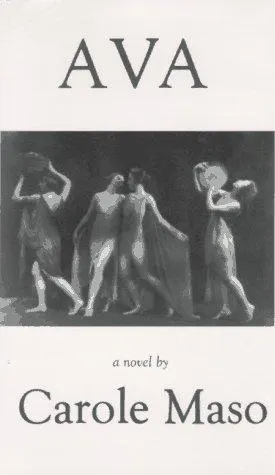
AVA unfolds across the final day of a woman’s life in brief, luminous fragments: memories, overheard phrases, quotations, jokes, lovers, music, travel, and flashes of bodily sensation. Rather than explain its protagonist from the outside, the novel lets a consciousness assemble itself from everything it has loved and absorbed.
Maso’s cult classic makes the white space around its sentences as expressive as the sentences themselves. Its collage form has the emotional precision of poetry, but its accumulating intimacies deliver the force of a novel. If the gaps, images, citations, and deathbed tenderness of Blackouts felt inseparable from its meaning, AVA is essential: a beautiful demonstration that fragmentation need not diminish a life—it can be the form that most fully preserves one.