Author
Books like Julie Otsuka
3 books we recommend to Julie Otsuka readers, drawn from The Buddha in the Attic — each with the reason why.
If you loved The Buddha in the Attic
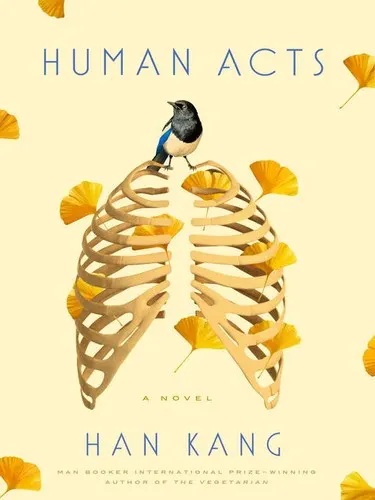
Beginning in the aftermath of the 1980 Gwangju massacre, Human Acts passes from one consciousness to another, making a public atrocity painfully intimate without reducing it to a single representative life. Han’s restrained prose can turn one physical detail—a hand, a smell, a piece of clothing—into an act of witness.
Like Otsuka, Han understands that beauty must not soften historical violence; it must make evasion impossible. Her shifts of voice and perspective ask who may speak for the dead and what the living carry afterward. Written by the 2024 Nobel laureate and widely regarded as one of her essential works, Human Acts has the same rare combination of lyric intensity, formal precision, and moral weight.
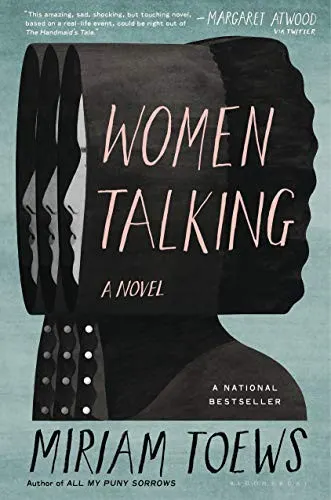
Eight women in an isolated Mennonite colony meet in a hayloft to decide how to respond to horrific violence. Their conversation, recorded in minutes by the colony’s schoolteacher, becomes an urgent collective act of thought: practical, theological, furious, funny, and full of disagreement.
Where Otsuka’s women gain force by speaking as “we,” Toews builds solidarity without erasing difference. Each speaker has her own rhythms, convictions, wounds, and flashes of wit; together they try to invent a future with almost no language available for it. This acclaimed novel proves that deliberation can be as suspenseful as action—and that women talking, seriously and freely, can become a revolutionary event.
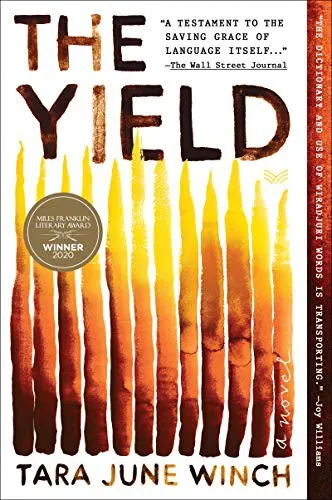
August Gondiwindi returns to Australia after her grandfather’s death and encounters the dictionary he was compiling of Wiradjuri words. Those entries do far more than define vocabulary: they open into memories, stories, jokes, grief, and knowledge that official records have failed to preserve.
A reader moved by Otsuka’s recovery of lives flattened by history will recognize Winch’s deeper project immediately. The Yield sets personal memory against institutional language and makes the survival of words inseparable from the survival of a people. Yet it is never merely archival: its voices are intimate, angry, playful, and alive. Winner of Australia’s Miles Franklin Award, it is a formally inventive novel whose very structure becomes an argument against disappearance.