Author
Books like Jeff VanderMeer
3 books we recommend to Jeff VanderMeer readers, drawn from Annihilation — each with the reason why.
If you loved Annihilation

The Zone here is not a puzzle designed for humans to solve. It is the contaminated aftermath of an event whose makers may never have noticed us, littered with phenomena that defeat both scientific language and ordinary intuition. Governments fence it off; researchers classify it; desperate scavengers enter anyway.
Where Annihilation is hushed and inward, Roadside Picnic is bitter, grimy, and darkly funny. Yet both understand contact as corrosion: the impossible environment alters careers, families, desires, and moral judgment long before anyone comprehends it. This enormously influential Soviet science-fiction novel inspired Tarkovsky’s Stalker, but its abrasive voice and vision of cosmic indifference remain uniquely its own.

A woman lies in a rural clinic while a boy questions her about how she came to be there. Their terse conversation keeps circling poisoned fields, a sick child, and the exact instant when danger entered an apparently ordinary world.
Schweblin creates ecological horror without panoramic explanations or conventional suspense machinery. Like VanderMeer, she makes contamination feel at once biological, psychological, and linguistic: every detail may be evidence, yet interpretation itself becomes unreliable. Megan McDowell’s taut translation preserves the novel’s breathless precision. Shortlisted for the International Booker Prize, Fever Dream is barely longer than a novella, but its menace lingers like something absorbed through the skin.
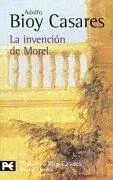
A fugitive hiding on an abandoned island begins seeing elegantly dressed visitors who neither acknowledge him nor behave quite as reality should require. He records their movements, tests hypotheses, and gradually constructs a theory of the island’s impossible machinery.
The kinship with Annihilation lies in the pleasure of watching a disciplined observer confront evidence that destabilizes the observer too. Bioy Casares’s crystalline sentences turn architecture, weather, and repeated gestures into clues charged with metaphysical dread. Borges famously praised its plot as perfect, and the claim feels less extravagant with every rereading: this brief Argentine classic is an exquisitely engineered mystery about perception, identity, and the terrible seductions of crossing beyond ordinary human life.