Author
Books like Jean-Christophe Rufin
3 books we recommend to Jean-Christophe Rufin readers, drawn from The Abyssinian — each with the reason why.
If you loved The Abyssinian
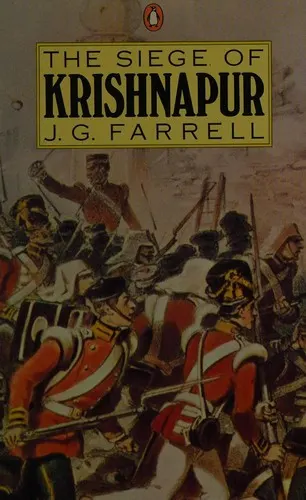
Farrell turns a British enclave in India into a brilliant comic laboratory. Its inhabitants bring faith in progress, bureaucracy, etiquette, and modern medicine; reality subjects every conviction to increasingly merciless tests. Like Rufin, Farrell makes ideas physical and funny: civilization resides in dinner rituals, scientific gadgets, medical disputes, and objects whose usefulness changes abruptly under pressure.
The comedy is more savage than Rufin’s, but the underlying intelligence is closely related. Both novelists distrust imperial self-importance without flattening their characters into villains, and both know that historical fiction becomes most alive when practical improvisation collides with grand political language. Winner of the 1973 Booker Prize, this is one of the great novels of empire—and far too exhilarating, grotesque, and witty to feel like a lesson.
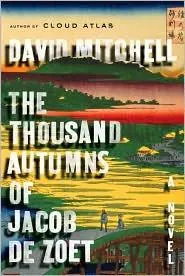
In 1799, a conscientious young Dutch clerk arrives at Dejima, the tightly controlled trading post through which Japan permits limited contact with Europe. He finds corruption, interpreters balancing incompatible allegiances, forbidden knowledge, and a gifted Japanese midwife whose ambitions exceed the world allotted to her.
Mitchell recreates the addictive sensation Rufin produces when diplomacy, medicine, commerce, and desire become inseparable. Every conversation crosses not only a language barrier but a moral one; misunderstandings matter, and integrity must operate without the comfort of cultural certainty. The novel is sensuous, suspenseful, and meticulously inhabited, yet its scholarship never slows its pulse. Readers devoted to Mitchell often regard it as one of his richest achievements: a vast historical world made intimate through two people trying to remain decent inside compromised institutions.
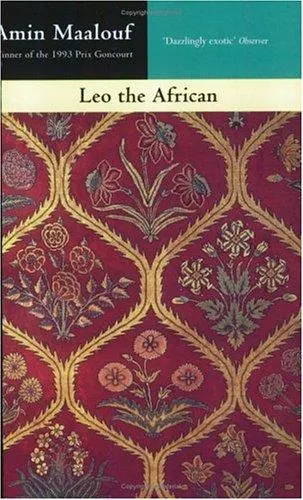
Hasan al-Wazzan—diplomat, traveler, captive, and scholar—recounts a life carried from Granada and Fez through Cairo and Rome. Maalouf gives him the rarest quality in historical fiction: an identity capacious enough to cross civilizations without becoming either rootless or representative of only one culture.
That makes Leo Africanus a natural destination after The Abyssinian. It has the same pleasure in hazardous journeys, courtly negotiations, shifting loyalties, and history seen by someone who notices the absurdities of every camp. More importantly, it shares Rufin’s generous skepticism: religions and empires make enormous claims, while individual curiosity and affection quietly prove more durable.
This novel established Maalouf as a major voice in Francophone historical fiction, and its enduring readership is deserved. Few books make the Mediterranean world feel so interconnected—or make tolerance feel less like a modern slogan than a hard-won form of intelligence.