Author
Books like Jane Smiley
6 books we recommend to Jane Smiley readers, drawn from A Thousand Acres and The Greenlanders — each with the reason why.
If you loved A Thousand Acres
Antara’s mother is losing her memory just as Antara is reckoning with a childhood shaped by neglect, manipulation, and fierce mutual dependence. Like Ginny, she must ask whether telling the truth will free her—or merely reveal how thoroughly she has been formed by the person she accuses.
Doshi’s Booker-shortlisted debut is sharper and more compressed than A Thousand Acres, with acid humor and a brilliantly unstable voice. Caregiving becomes a contest over whose version of the past will survive. Readers drawn to Smiley’s refusal to make suffering morally tidy will find this short novel almost impossible to shake.
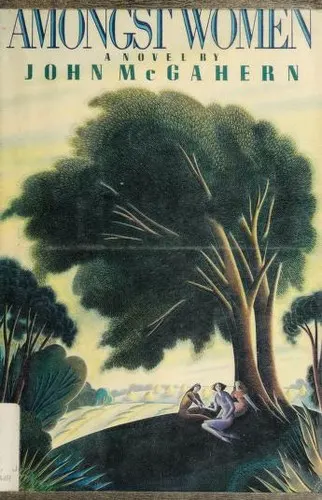
Michael Moran, an aging former guerrilla, rules his small Irish farm and family through pride, grievance, ritual, and unpredictable tenderness. His daughters love him, fear him, escape him, and remain bound to him—an emotional configuration any admirer of Larry Cook’s kingdom will recognize.
McGahern’s Booker-shortlisted masterpiece achieves its force without melodrama. A prayer, a homecoming, or a silence at the table can expose an entire system of domination. Few novels understand so precisely how a patriarch’s power persists inside his children even after they have built lives elsewhere.
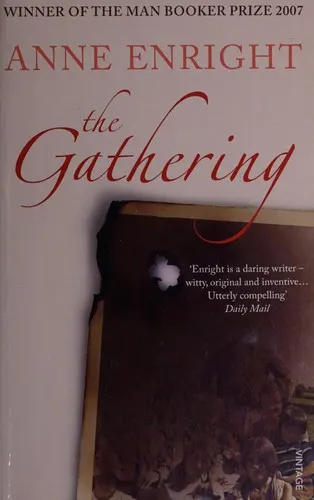
After her brother’s death, Veronica Hegarty returns to her enormous, contentious family and begins reconstructing the history they share. Memory arrives in fragments: sensuous, doubtful, furious, sometimes imagined. As in A Thousand Acres, the narrator’s uncertainty does not weaken her testimony; it shows what secrecy has done to her ability to possess her own past.
Winner of the Booker Prize, The Gathering is darker, stranger, and more mordantly funny than its premise suggests. Enright turns sibling rivalry, bodily memory, and domestic detail into a devastating inquiry: when damage belongs to a whole family, who is allowed to name it? Veronica’s voice deserves to haunt the same shelf as Ginny Cook’s.
If you loved The Greenlanders
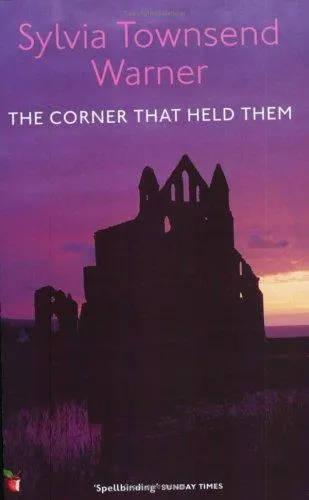
Warner’s great convent chronicle has the same rare confidence as The Greenlanders: individuals matter, yet the community and the passing centuries matter more. Nuns die, offices change hands, buildings decay, money disappears, and daily necessity keeps history moving. Warner watches all this with an amused, unsentimental omniscience that resembles Smiley’s saga voice without imitating it.
Long cherished as a cult masterpiece and revived by NYRB Classics, the novel turns administration, weather, illness, appetite, and petty resentment into something mysteriously absorbing. Its medieval convent is not a picturesque backdrop but a complete social organism. Few novels make ordinary endurance feel so strange, consequential, and alive.
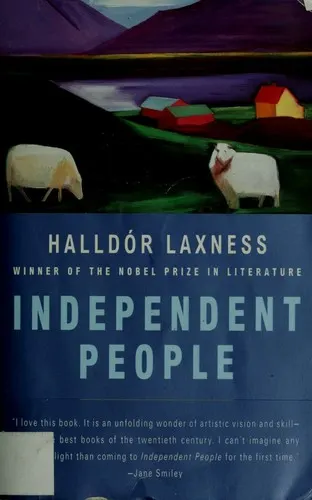
Bjartur, an Icelandic sheep farmer, has purchased a bleak smallholding and made independence his religion. Every sack of provisions, cup of coffee, sick ewe, unpaid debt, and patch of bad weather becomes a test of that faith. A reader drawn to Smiley’s exact understanding of how land, scarcity, pride, and inherited stories govern human lives will recognize the force of Laxness immediately.
Yet this is no solemn imitation of a saga. Laxness is savagely funny, lyrical, and compassionate even when his characters are most exasperating. Bjartur’s heroic self-conception repeatedly collides with material reality, while the novel asks whether independence can become another form of bondage. Widely regarded as Laxness’s masterpiece, it helps explain why he won the Nobel Prize: its sheep farm expands into an unforgettable argument about freedom, family, and the price of refusing help.
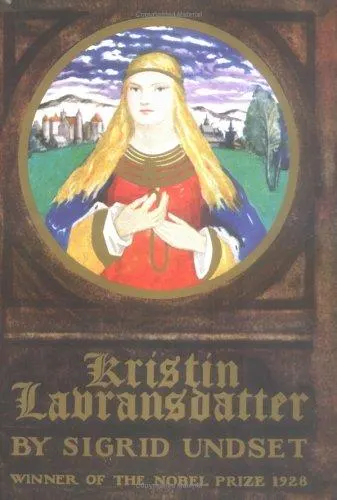
Undset offers the ideal complement to Smiley. Where The Greenlanders often preserves the stern distance of a chronicle, this trilogy moves deep inside one medieval woman’s moral life while retaining the same dense web of kinship, obligation, labor, faith, property, and reputation. Kristin grows up in a world where private desire can alter the fortunes of an entire household, and where belief is neither decoration nor allegory but a daily, demanding reality.
Undset’s medieval Norway feels inhabited down to its food, clothing, journeys, legal customs, and seasonal work, but the novel’s greatness lies in its psychological candor. Kristin is neither modern heroine nor historical specimen; she is passionate, stubborn, perceptive, and capable of deceiving herself. The trilogy helped secure Undset’s Nobel Prize and inspires unusual devotion in its readers. In Tiina Nunnally’s supple translation, it is one of the few historical novels capacious enough to stand beside The Greenlanders rather than merely resemble it.