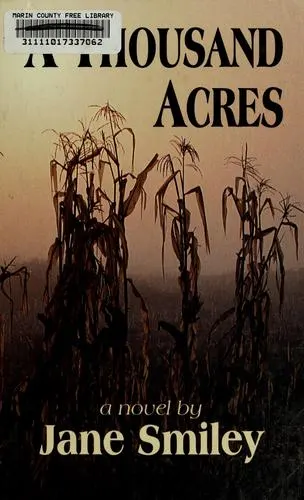
Books like A Thousand Acres
Avni Doshi’s Burnt Sugar exchanges Iowa farmland for contemporary India, yet reaches the same raw territory: a daughter testing her memories against a family story designed to silence her. The three novels below share A Thousand Acres’ deepest strengths—moral ambiguity, intimate power struggles, and the slow exposure of what a family cannot admit.
If you liked A Thousand Acres, you’ll love these
Not lookalikes — kindred books. Each one shares something essential with A Thousand Acres, and we tell you exactly what.
Antara’s mother is losing her memory just as Antara is reckoning with a childhood shaped by neglect, manipulation, and fierce mutual dependence. Like Ginny, she must ask whether telling the truth will free her—or merely reveal how thoroughly she has been formed by the person she accuses.
Doshi’s Booker-shortlisted debut is sharper and more compressed than A Thousand Acres, with acid humor and a brilliantly unstable voice. Caregiving becomes a contest over whose version of the past will survive. Readers drawn to Smiley’s refusal to make suffering morally tidy will find this short novel almost impossible to shake.
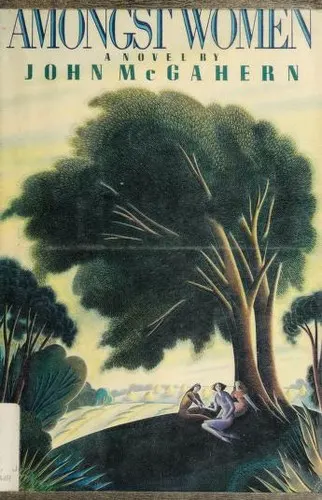
Michael Moran, an aging former guerrilla, rules his small Irish farm and family through pride, grievance, ritual, and unpredictable tenderness. His daughters love him, fear him, escape him, and remain bound to him—an emotional configuration any admirer of Larry Cook’s kingdom will recognize.
McGahern’s Booker-shortlisted masterpiece achieves its force without melodrama. A prayer, a homecoming, or a silence at the table can expose an entire system of domination. Few novels understand so precisely how a patriarch’s power persists inside his children even after they have built lives elsewhere.
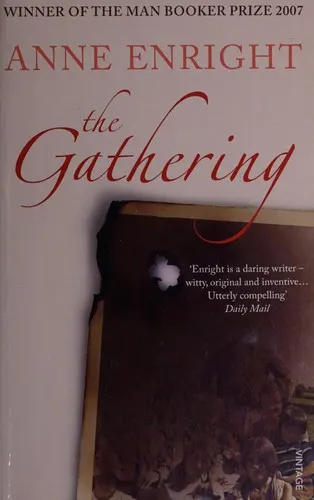
After her brother’s death, Veronica Hegarty returns to her enormous, contentious family and begins reconstructing the history they share. Memory arrives in fragments: sensuous, doubtful, furious, sometimes imagined. As in A Thousand Acres, the narrator’s uncertainty does not weaken her testimony; it shows what secrecy has done to her ability to possess her own past.
Winner of the Booker Prize, The Gathering is darker, stranger, and more mordantly funny than its premise suggests. Enright turns sibling rivalry, bodily memory, and domestic detail into a devastating inquiry: when damage belongs to a whole family, who is allowed to name it? Veronica’s voice deserves to haunt the same shelf as Ginny Cook’s.