Author
Books like James Kelman
3 books we recommend to James Kelman readers, drawn from How Late It Was, How Late — each with the reason why.
If you loved How Late It Was, How Late
The kinship is immediate: a damaged, stubborn narrator speaks from inside bodily distress while policemen, functionaries and inexplicable rules close around him. Beckett turns uncertainty—about memory, motive, even the simplest sequence of events—into savage comedy. Like Sammy, Molloy may be confused, but confusion does not make him a fool; it exposes how absurd the demand for an orderly account can be.
As the opening volume of Beckett’s great postwar trilogy, Molloy is a crucial ancestor of Kelman’s fusion of demotic speech, philosophical intensity and resistance to authority. Its sentences can be bleak, sly and uproariously funny at once. Anyone exhilarated by Sammy’s mind should meet one of the voices that helped make such a novel possible.
Joy Stone, a drama teacher scarcely holding herself together, encounters a world that keeps converting pain into forms, labels, advice and banal therapeutic language. Galloway does not merely describe her distress: fractured paragraphs, lists, blank spaces and intrusive slogans make the page itself register the pressure on her consciousness.
What Kelman achieves through Sammy’s relentless voice, Galloway achieves through daring visual and verbal form. Both novelists refuse the polite distance with which suffering is often presented, yet Galloway’s wit prevents the book from becoming solemn. Winner of the MIND/Allen Lane Book of the Year Award and now an enduring modern Scottish classic, this is a fierce, formally ingenious novel whose influence is far larger than its modest size.
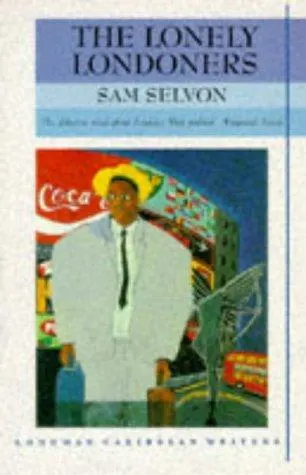
Selvon’s novel follows Caribbean newcomers trying to make lives in 1950s London, but its deepest affinity with Kelman lies in who controls the language. Creolized speech does not sit decoratively inside standard narration: it becomes the narration, giving rhythm, intelligence and authority to people respectable Britain prefers to caricature or ignore.
The result is warmer and more communal than How Late It Was, How Late, full of hustling, loneliness, sexual bravado and magnificent comic storytelling. Yet beneath the exuberance is the same sharp knowledge that housing, work and official respectability are arranged to keep certain people precarious. A landmark of postwar British fiction, The Lonely Londoners proved that the novel could sound radically different once those kept at its margins seized the storyteller’s voice. Missing it means missing one of Kelman’s most vital literary forebears.