Author
Books like Jacqueline Carey
3 books we recommend to Jacqueline Carey readers, drawn from Kushiel's Dart — each with the reason why.
If you loved Kushiel's Dart

For the dangerous elegance of Terre d’Ange, go to Riverside. Here aristocrats treat intrigue as an art, professional swordsmen settle their quarrels, and wit can draw blood before steel does. At its center are peerless duelist Richard St Vier and his sharp-tongued lover Alec, whose volatile intimacy gives every political maneuver an erotic charge.
Kushner’s precise, glittering prose is leaner than Carey’s, but it creates the same pleasure of watching cultivated people behave beautifully and appallingly. Now a cult classic and a foundational work of fantasy of manners, Swordspoint helped make space for unabashedly queer, morally complicated fantasy. Its brevity only makes it more lethal.
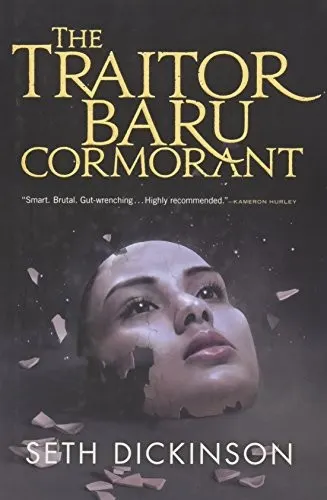
If Phèdre’s education in languages, observation, and human appetite was as thrilling to you as her adventures, Baru Cormorant is essential. When a calculating empire absorbs her homeland, Baru decides to master its own instruments—schools, money, bureaucracy, social prejudice—and rise from within.
This is political fantasy in which accounting can be as suspenseful as assassination. Baru reads institutions as Phèdre reads people, finding the concealed desire behind every public principle. But Dickinson presses harder on the cost of serving power without surrendering to it, especially for a queer woman forced to turn self-command into armor. The novel’s fiercely devoted reputation rests on that union of formidable intelligence and emotional devastation: it does not merely depict sacrifice; it makes every sacrifice hurt.
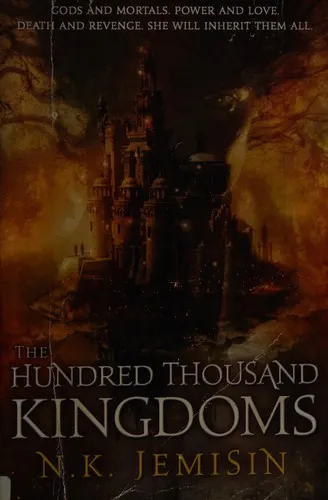
Yeine Darr arrives at the dazzling capital of Sky after being unexpectedly summoned into its ruling family, where she finds succession politics inseparable from captive gods. The result has the courtly splendor and intimate peril a Carey reader craves: family alliances are weapons, divinity is sensuous and frightening, and attraction can become both revelation and vulnerability.
Jemisin gives Yeine the quality that makes Phèdre so compelling—she is surrounded by people with greater formal power, yet she refuses to be merely acted upon. Her clear-eyed first-person voice steadily exposes the appetites beneath an apparently sacred order. Winner of the Locus Award for Best First Novel, this was the debut that announced one of modern fantasy’s defining writers; its gods alone—wounded, desirous, and never safely symbolic—make it unforgettable.