Author
Books like Hernán Díaz
6 books we recommend to Hernán Díaz readers, drawn from Trust and In the Distance — each with the reason why.
If you loved Trust
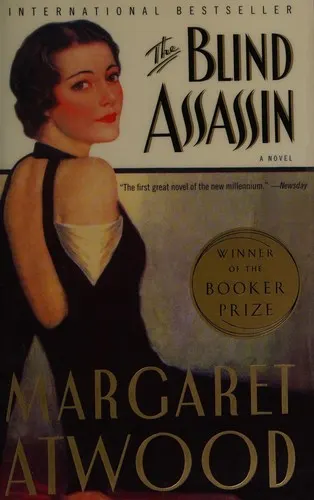
Atwood’s Booker Prize winner offers the same exhilarating sense that every new text is revising the one before it. An elderly woman recounts her wealthy Canadian family’s decline, while newspaper reports, public records, and a scandalous novel embedded inside her memoir propose competing versions of the past.
Like Díaz, Atwood can reproduce the polished language of respectable society while exposing the violence concealed by it. Her real subject is who gets commemorated, who gets silenced, and how a woman can hide testimony inside forms men dismiss. The construction is dazzling, but the accumulated emotional force is what has made the novel one of Atwood’s most beloved.
The overlooked artist Harriet Burden devises a furious experiment: she exhibits her work behind three male identities to test whether the art world values objects differently when it imagines a man made them. Hustvedt presents the aftermath through Burden’s notebooks, interviews, reviews, and contradictory testimony, edited into a deliberately unstable archive.
This is an especially sharp companion to Trust because it treats attribution as material power. A name controls prestige, price, and posterity; even rebellion can be repackaged by the institutions it attacks. Booker-longlisted and intellectually audacious, The Blazing World makes its documentary puzzle inseparable from Burden’s rage, wit, and hunger to be seen. It deserves the larger readership its heroine was denied.
A young woman adopts the identity “Rebecca Smyth” to investigate a notorious 1960s psychotherapist whom she suspects of destroying her sister. Her notebooks alternate with a sober biography of the therapist—and soon the reader is auditing not only their claims but the authority of the book itself.
Burnet’s Booker-longlisted novel has Trust’s uncanny ability to make invented documents feel discovered rather than composed. Yet its tone is entirely its own: dryly funny, psychologically slippery, and alive to the way people manufacture selves for an audience. Every case history becomes a performance, every diagnosis a bid for control. Few novels make skepticism this pleasurable.
If you loved In the Distance
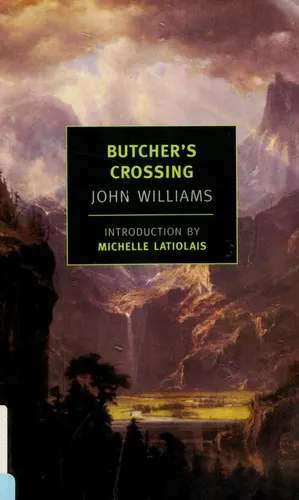
A Harvard dropout arrives in 1870s Kansas seeking an authentic encounter with the wilderness and joins a buffalo-hunting expedition. Williams renders that pursuit without romance: bodily exhaustion, commercial appetite, and sublime beauty become inseparable.
Like Díaz, he dismantles the Western by taking its grandest promises seriously and following them to their bleak conclusions. The landscape is not scenery but a force that exposes every delusion carried into it. Long overshadowed by Williams’s Stoner, this NYRB Classics rediscovery is now rightly regarded as a defining anti-Western—cold, exact, and unforgettable.
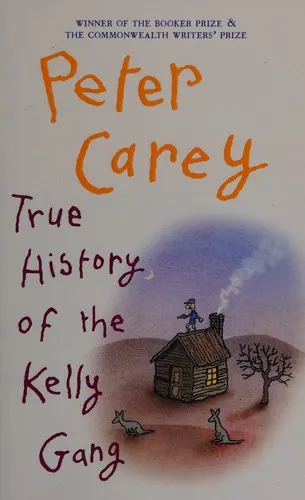
Where Håkan is gradually silenced beneath other people’s stories, Ned Kelly tries to seize control of his own. Carey’s outlaw addresses his life to the daughter he has never seen, writing in a breathless, punctuation-starved voice that feels both rough-hewn and astonishingly intimate.
The kinship lies in the painful gap between a vulnerable person and the monstrous public legend forming around him. Carey shows how poverty, inherited shame, violence, and storytelling manufacture an icon. Winner of the Booker Prize, the novel earns its stature not by polishing folklore but by making a famous silhouette live, plead, boast, and contradict itself.
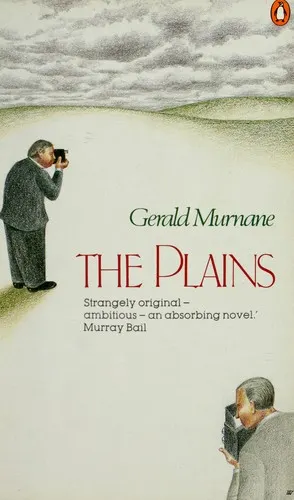
An unnamed filmmaker enters Australia’s interior hoping to persuade wealthy landowners to support a film about the plains. Almost immediately, geography becomes something stranger: a private theology, an artistic obsession, and an endlessly receding object of desire.
Readers who loved the uncanny spaciousness of In the Distance will recognize Murnane’s ability to make distance itself feel metaphysical. His plains are invented as much as explored, just as Díaz’s America is built from fantasies that fail those who inhabit them. This brief cult masterpiece has inspired fierce devotion because no other novel sees landscape quite this way; after reading it, an empty horizon never looks empty again.