Author
Books like Hanya Yanagihara
3 books we recommend to Hanya Yanagihara readers, drawn from A Little Life — each with the reason why.
If you loved A Little Life
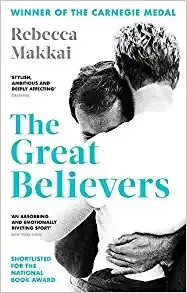
Few novels match A Little Life’s understanding that friendship is not secondary to romance but a life-defining commitment. In 1980s Chicago, Yale Tishman watches AIDS destroy the community around him; decades later, the damage still reverberates through those who survived. Makkai makes care tangible—hospital visits, shared apartments, parties shadowed by dread—and gives every loss the weight of a whole interrupted future.
A Pulitzer Prize finalist, The Great Believers earned its acclaim through emotional precision rather than easy sentiment. It is more historically and socially expansive than Yanagihara’s novel, but just as interested in the terrible limits of love: how fiercely people can hold one another and how much can still be taken. Its characters will remain vivid long after the final page.

At the center of Shuggie Bain is a child’s unwavering love for his alcoholic mother, Agnes—a glamorous, wounded woman determined to preserve dignity amid poverty and abandonment. Shuggie’s devotion has the same agonizing purity as the deepest relationships in A Little Life: he sees the damage clearly, yet cannot stop hoping that love, vigilance, and loyalty might save someone.
Douglas Stuart’s Booker Prize–winning debut is brutal without making its characters merely pitiable. Its Glasgow is alive with acid humor, gossip, cruelty, and flashes of beauty, while its prose makes Agnes’s smallest gestures unforgettable. Readers who responded to Yanagihara’s willingness to stay beside suffering rather than glance away will find this equally consuming—and Shuggie’s capacity for tenderness makes the novel almost unbearably precious.
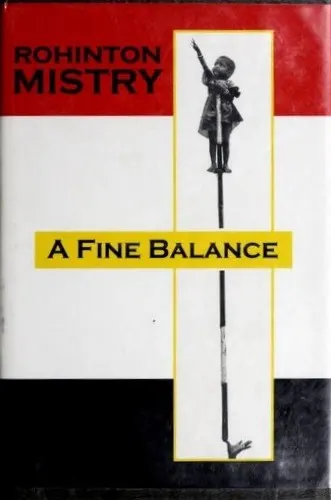
A Fine Balance brings four strangers together in a cramped apartment and gradually turns necessity into attachment. Their temperaments clash, their histories press upon them, and ordinary acts—sharing food, sewing clothes, making room—become defenses against a world organized to crush the vulnerable. Like A Little Life, it asks how people continue after humiliation and violence, and whether companionship can create a livable space inside circumstances it cannot fix.
Shortlisted for the Booker Prize and now widely regarded as Mistry’s masterpiece, this is a vast novel with the closeness of a family story. Its suffering is formidable, but so are its comedy, warmth, and attention to daily life. By the time its characters begin to depend on one another, their makeshift household feels indispensable; not reading it means missing one of fiction’s most powerful accounts of friendship as survival.