Author
Books like George R. Stewart
3 books we recommend to George R. Stewart readers, drawn from Earth Abides — each with the reason why.
If you loved Earth Abides
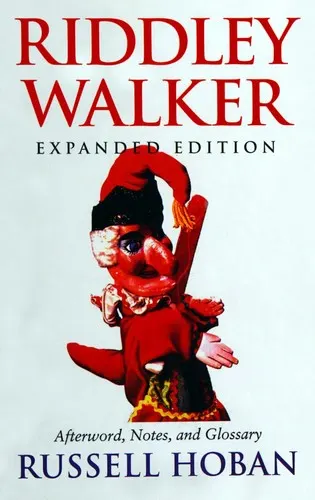
No novel better captures Stewart’s insight that collapse does not simply erase a culture—it transforms it into fragments, rituals, misunderstandings, and new forms of knowledge. Centuries after catastrophe, young Riddley inhabits an England whose damaged language embodies its damaged inheritance. Reading initially requires attention, but the dialect soon becomes thrilling: every warped word contains archaeological evidence of the lost world.
Like Earth Abides, this is anthropology conducted through fiction. Hoban makes you watch a society invent explanations, preserve memories it no longer understands, and edge toward dangerous discoveries. Admired as a modern cult classic by writers including Anthony Burgess and Iain M. Banks, Riddley Walker offers something rare: not merely a ruined civilization, but a fully imagined consciousness growing from its ruins.

A woman vacationing in the Austrian mountains awakens to find herself cut off from the rest of humanity by an invisible barrier. From that stark opening, Haushofer refuses spectacle. Her narrator must learn weather, animals, tools, seasons, and the limits of her own endurance; survival becomes repetitive, physical, and strangely sacred.
What connects it most deeply to Earth Abides is its unsentimental attention to a world no longer organized around human convenience. Haushofer writes about solitude and labor with an almost hypnotic exactness, while the companionship of animals acquires enormous emotional force without becoming sentimental. Long revered in German-language literature and increasingly recognized internationally as a masterpiece, The Wall leaves many readers feeling that they have not observed isolation but inhabited it.

Stewart asks what might endure after institutions fail; Miller asks how knowledge itself survives when preservation becomes a task performed by people who may not understand what they are preserving. In a desert monastery founded after a devastating technological collapse, scraps of the old civilization are guarded with comic solemnity and profound faith.
The novel’s kinship with Earth Abides lies in its long historical vision. Individual lives pass, meanings mutate, and societies rebuild according to patterns both inspiring and ominous. Yet Miller is more sardonic and theological than Stewart, balancing intellectual argument with vivid characters and dry humor. Winner of the Hugo Award and hugely influential on later post-apocalyptic fiction, A Canticle for Leibowitz is one of the few novels that can make civilization’s entire arc feel at once tragic, absurd, and precious.