Author
Books like Gaétan Soucy
3 books we recommend to Gaétan Soucy readers, drawn from The Little Girl Who Was Too Fond of Matches — each with the reason why.
If you loved The Little Girl Who Was Too Fond of Matches
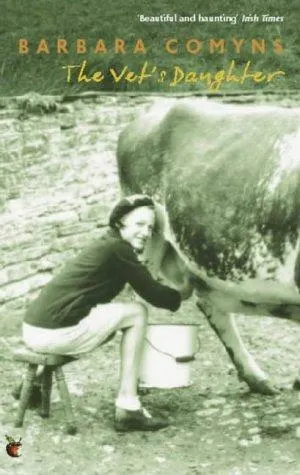
Alice Rowlands narrates life under the rule of her brutal veterinarian father in prose so guileless that every cruelty becomes more uncanny. Like Soucy, Comyns lets an apparently simple voice disclose a reality the speaker cannot fully interpret; the reader is always hearing more than the narrator knows.
Yet the book is not unrelievedly grim. Its deadpan observations, grotesque household, and fairy-tale logic give it a peculiar comic buoyancy. Long cherished as a cult English classic, The Vet’s Daughter is brief, lucid, and quietly devastating—the sort of novel whose strange emotional weather follows you for years.
Frank lives with an eccentric father on an isolated Scottish island, maintaining private rituals and interpreting the world through an elaborate homemade cosmology. What connects Banks’s notorious debut to Soucy is the exhilarating intimacy of that sealed consciousness: violence, childish reasoning, theology, and black comedy become inseparable because Frank’s voice makes them so.
Banks writes with more swagger and satirical bite than Soucy, but he shares Soucy’s gift for making horror horribly funny. The Wasp Factory divided reviewers on publication and then acquired a fiercely devoted readership; its provocations endure because beneath them lies a brilliantly controlled study of how authority and isolation manufacture identity.
For the reader who wants Soucy’s Gothic claustrophobia intensified into a whole architecture of nightmares, Donoso’s masterpiece is indispensable. It begins amid a decaying religious house populated by old women, servants, stories, and secrets; soon the narration itself seems infected by the place. Voices bleed together, identities become unstable, and family history hardens into monstrous folklore.
Donoso’s prose is denser and more labyrinthine than Soucy’s, but it offers the same thrilling sense that language is not describing a prison—it is building one around you. Widely regarded as Donoso’s greatest novel and a landmark of Latin American fiction, The Obscene Bird of Night is difficult in the rewarding sense: few books so completely transform bewilderment into terror, or grotesquerie into tragic grandeur.