Author
Books like G. K. Chesterton
3 books we recommend to G. K. Chesterton readers, drawn from The Man Who Was Thursday — each with the reason why.
If you loved The Man Who Was Thursday
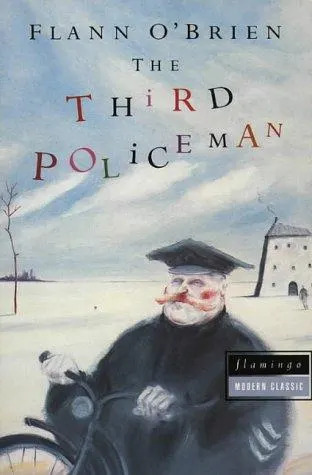
This is the closest match for Chesterton’s peculiar fusion of slapstick, nightmare, and metaphysics. Its unnamed narrator—a scholar obsessed with the preposterous philosopher de Selby—enters a world where lunatic reasoning is pursued with terrifying consistency. Footnotes multiply, ordinary objects become ontological problems, and every absurdity is delivered with a perfectly straight face.
Written in the 1940s but rejected and published only after O’Brien’s death, it has since become a fiercely loved cult classic. If Thursday delighted you by making logic itself feel dangerous, The Third Policeman is indispensable: it is as though Chesterton’s paradoxes escaped, formed their own universe, and began enforcing its laws.
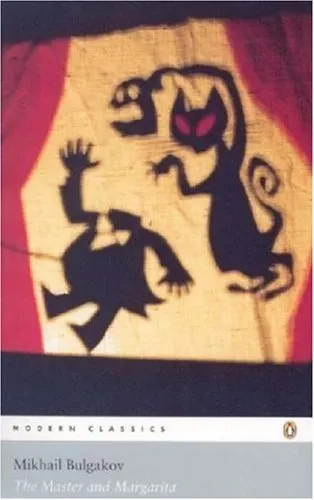
At Patriarch’s Ponds, two Soviet literary men are discussing the nonexistence of God when an impeccably mannered stranger joins them and quietly takes control of the conversation. From that opening, Bulgakov creates a carnival in which satire, theology, romantic longing, and supernatural comedy strengthen rather than cancel one another.
Like Chesterton, Bulgakov understands that metaphysical seriousness need not be solemn. Both novels use masks, reversals, outrageous coincidences, and diabolically courteous figures to ask whether the universe is governed by chaos or by a design too large to recognize. Suppressed in Bulgakov’s lifetime and first published posthumously in censored form, The Master and Margarita became one of the twentieth century’s most beloved novels. Its laughter has grandeur behind it.
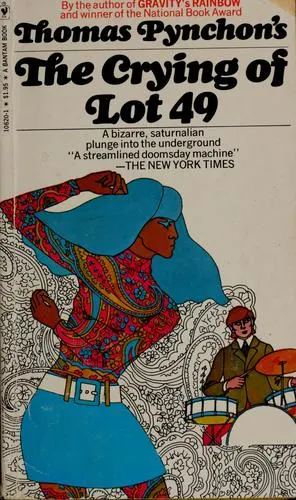
Oedipa Maas is unexpectedly named executor of a former lover’s estate, and the task places her inside a world that seems charged with hidden significance. Pynchon makes the reader share her alertness: jokes, names, scraps of history, and apparent coincidences all begin to look like parts of an immense design.
Where Thursday turns conspiracy into a theological masquerade, Pynchon turns it into a problem of interpretation. Is pattern a revelation, a trap, or simply what the mind creates when randomness becomes intolerable? Yet the novel is never a dry puzzle; it is brief, antic, melancholy, and packed with verbal invention. A cornerstone of postwar American fiction, it offers the rare thrill of a book whose mystery continues operating inside the reader long after its final page.