Author
Books like Dorothy B. Hughes
3 books we recommend to Dorothy B. Hughes readers, drawn from In a Lonely Place — each with the reason why.
If you loved In a Lonely Place

A reclusive young woman in Los Angeles begins receiving threatening telephone calls from someone who seems to know exactly where her deepest fears are buried. From that modest disturbance, Margaret Millar creates an atmosphere of profound psychic danger: identities become unstable, private humiliations turn weapon-like, and the city’s bright surfaces offer no protection against loneliness.
Like Hughes, Millar understands that suspense can come not from concealing a monster but from forcing us into uncomfortable proximity with damaged people. Her characterization is pitiless without being crude, and her shifts in perspective repeatedly expose the assumptions through which women are judged and controlled. Winner of the Edgar Award for Best Novel, Beast in View is a landmark of psychological suspense whose precision still feels startling. Anyone captivated by Hughes’s ability to make perception itself sinister should not miss it.
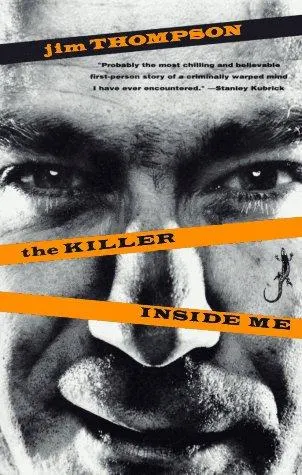
Lou Ford presents himself as a slow, obliging small-town deputy—the sort of man others underestimate and then forget. His own voice tells us otherwise. Thompson’s great achievement is making that voice at once intimate, darkly funny, self-serving, and horrifying: every apparent confidence becomes another demonstration of how completely Lou converts other people into objects in his private drama.
Readers who admired Hughes’s demolition of the glamorous, wounded noir antihero will recognize a similarly ruthless project here, but Thompson’s method is harsher and more claustrophobic. The novel never asks you to admire its narrator; it makes you study the stories he tells himself, and the ease with which charm, authority, and misogyny reinforce one another. Long regarded as one of Thompson’s defining novels, it is among the essential works of American noir—not because it is sensational, but because its poisoned narrative voice is almost impossible to escape.
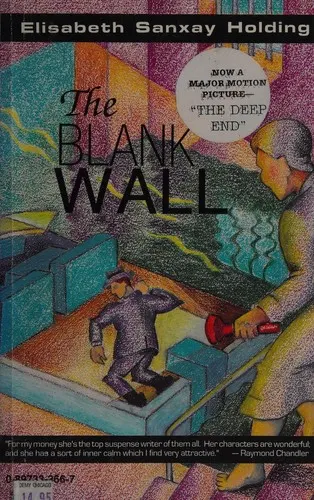
While her husband is away at war, Lucia Holley must keep an ordinary household functioning: children, servants, bills, meals, appearances. Then trouble enters through her daughter, and Lucia discovers that protecting a family may require decisiveness no one has ever expected her to possess.
The kinship with In a Lonely Place lies in the intelligence beneath the suspense. Holding exposes the gendered assumptions that determine who appears innocent, who is believed, and whose labor remains invisible. Yet where Hughes tracks masculine entitlement from within, Holding follows a woman discovering the frightening extent of her own competence. The domestic details do not soften the danger; they tighten it, because every crisis must be managed before dinner and hidden from the neighbors.
Raymond Chandler was among Holding’s admirers, and Max Ophuls transformed the novel into the celebrated film The Reckless Moment. The book itself is leaner, stranger, and more emotionally exact than its reputation as ‘domestic suspense’ suggests—a nearly perfect demonstration of how ordinary responsibility can become moral heroism.