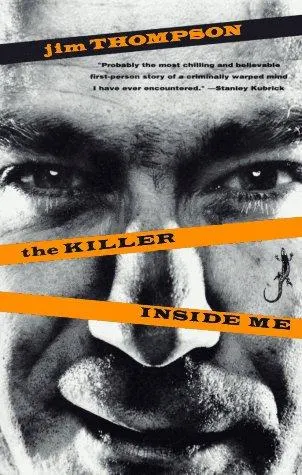
Books like The Killer Inside Me
Begin at the dinner table. John Lanchester’s elegant food writing may seem far from Thompson’s dust and cheap liquor, but the meal is being served by exactly the kind of insinuating, self-justifying intelligence that makes The Killer Inside Me so poisonous. These three novels preserve Thompson’s greatest strength: making a monstrous mind feel horribly reasonable from the inside.
If you liked The Killer Inside Me, you’ll love these
Not lookalikes — kindred books. Each one shares something essential with The Killer Inside Me, and we tell you exactly what.
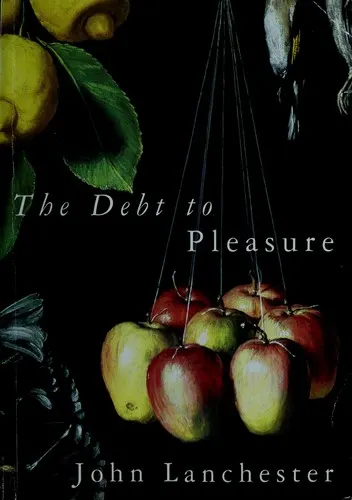
Tarquin Winot conducts the reader through recipes, restaurants, travel memories, and pronouncements on taste. His prose is cultivated, funny, and exquisitely controlled—and every polished sentence gradually exposes something rancid beneath the charm.
Like Lou Ford, Tarquin treats narration as camouflage. Both men enlist us as confidants, turning wit and apparent candor into instruments of domination. Lanchester’s novel is more ornate than Thompson’s, but its comedy has the same chill: we laugh because the voice is irresistible, then realize what our laughter has allowed us to overlook. Winner of the Whitbread First Novel Award, it is a virtuoso performance in which style itself becomes evidence.
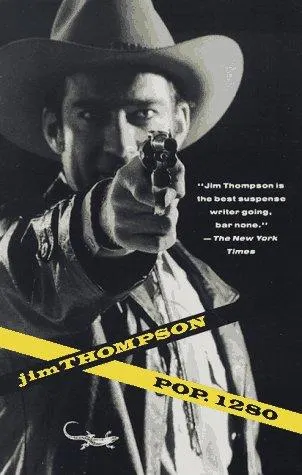
If The Killer Inside Me left you wanting another encounter with Thompson at full strength, this is indispensable. Nick Corey, sheriff of a tiny town, presents himself as lazy, foolish, and put-upon. His amiable drawl is a mask, and watching him use other people’s contempt as leverage is one of noir’s nastiest pleasures.
The kinship with Lou Ford is immediate, but Pop. 1280 is not a rehearsal or imitation. It widens Thompson’s vision into a savage comedy of authority, racism, appetite, and civic hypocrisy. Nick’s voice is looser and funnier than Lou’s, which makes the darkness arrive from unexpected angles. Often ranked with The Killer Inside Me as Thompson’s masterpiece, it shows that his great subject was not merely the hidden psychopath, but the society eager to mistake him for an ordinary man.
Burke Devore has been discarded after decades of loyal corporate work. He studies the small number of men qualified for the jobs he needs and begins applying the clear-eyed logic of competition to the problem. Westlake makes each step sound practical before letting its moral obscenity register.
That is precisely the Thompson-like trap: intimacy with a narrator whose reasoning becomes more coherent as his humanity deteriorates. Yet The Ax replaces Lou Ford’s small-town duplicity with résumés, layoffs, mortgages, and managerial euphemisms. Its murders grow from the language of ordinary economic life, giving the novel a furious social intelligence as well as suspense. Westlake was a master of both comic crime and hard noir, and this bleak, deadpan novel fuses the two modes perfectly. Once Burke starts explaining himself, it is almost impossible to stop listening.