Author
Books like Donald E. Westlake
6 books we recommend to Donald E. Westlake readers, drawn from The Ax and The Hunter — each with the reason why.
If you loved The Ax
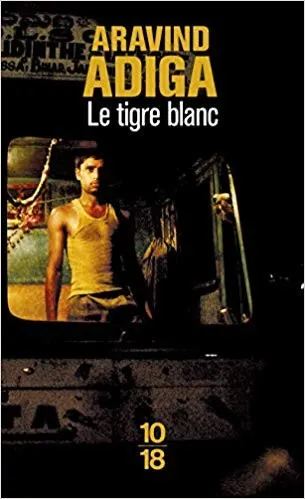
Balram Halwai narrates his rise from village poverty to entrepreneurship in a series of exuberant letters that announce, almost immediately, both a murder and his refusal to feel properly ashamed of it. Like Burke Devore, he treats crime not as madness but as an intelligible response to a system designed to discard him.
Adiga’s Booker Prize winner has the same unnerving gift as The Ax: it makes a monstrous argument sound lucid, funny, and uncomfortably persuasive. Balram’s voice—boastful, observant, furious—is impossible to resist, and his analysis of how capitalism converts humiliation into ambition gives the comedy real venom. Few novels make moral compromise feel so much like practical intelligence.
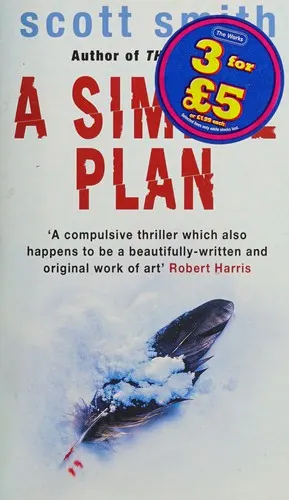
Three ordinary men discover millions of dollars in a crashed airplane and persuade themselves that keeping it will be safe if they follow a few sensible rules. From that premise, Scott Smith constructs an exquisitely controlled sequence of decisions in which every new transgression seems to be merely the necessary protection of the last.
A reader who admired the procedural rigor of The Ax will recognize the pleasure and horror of watching ethics become logistics. Smith never needs caricature or melodrama; he understands that suspense becomes more frightening when the people involved remain recognizably mundane. The novel has endured as a modern suspense classic because its machinery is nearly flawless—and because its deepest trap is making you think alongside its protagonist.
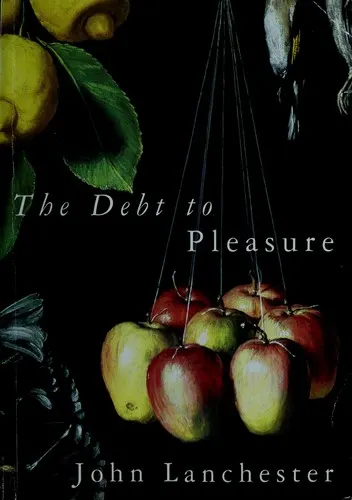
Tarquin Winot presents himself as a cultivated traveler and culinary authority, offering recipes, memories, aesthetic judgments, and increasingly poisonous observations. His voice is so polished—and his vanity so entertaining—that menace slips into the book almost unnoticed.
Where Westlake uses managerial rationality to escort readers across moral boundaries, Lanchester uses taste. Tarquin turns refinement into a license for contempt, explaining himself with the composure of a man who believes style is evidence of innocence. Winner of the Whitbread First Novel Award, The Debt to Pleasure has become a cult favorite among connoisseurs of unreliable narrators. It is elegant, grotesque, and wickedly funny: a book whose charm is inseparable from its danger.
If you loved The Hunter
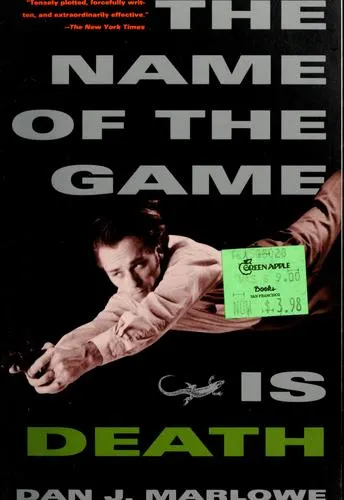
This is the closest thing to discovering another first-rate Parker novel written by someone else. After a bank robbery separates him from his partner, Marlowe’s narrator follows a broken line of communication with terrifying patience. He is not reckless or theatrically evil; he is observant, disciplined, and governed by rules that make perfect sense to him.
Marlowe’s sentences have the same hard forward drive as Richard Stark’s, while the first-person voice lets you feel the calculation behind every move. Long cherished by hard-boiled devotees as Marlowe’s masterpiece, this is one of the few cult crime novels whose ferocity genuinely warrants the reputation.
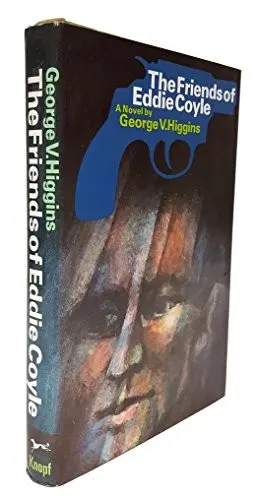
Where The Hunter turns a criminal campaign into stripped-down geometry, Higgins reveals the anxious human traffic underneath the geometry. Eddie Coyle is an aging Boston gunrunner facing prison, and nearly everything depends on conversations in bars, cars, cafeterias, and parking lots—conversations in which favors become traps and apparently casual remarks carry lethal weight.
Higgins’s celebrated debut changed crime fiction by trusting dialogue to do almost all the work. Its criminals are competent but vulnerable, forever negotiating within systems they cannot master. Reading it after The Hunter is like seeing Parker’s remorseless underworld from the viewpoint of the men caught in its gears.
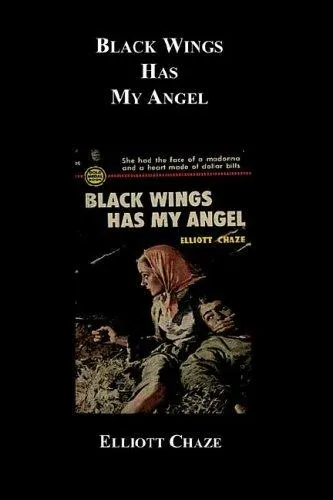
Chaze offers the sensual, feverish counterpart to Stark’s austerity. An ex-con with a carefully prepared robbery in mind meets Virginia, a woman too intelligent and self-possessed to remain merely part of his plan. Their attraction has the dangerous force of two people recognizing both an accomplice and a threat.
The novel’s language is more lyrical than Westlake’s, but its fatalism is just as hard: money, desire, and distrust tighten around the characters with mechanical inevitability. Once an elusive paperback prized by noir collectors and later restored to print as a neglected classic, Black Wings Has My Angel earns its devoted following sentence by sentence. It is noir not as costume or atmosphere, but as a beautiful, irreversible decision.