Author
Books like David Lindsay
3 books we recommend to David Lindsay readers, drawn from A Voyage to Arcturus — each with the reason why.
If you loved A Voyage to Arcturus
MacDonald’s dream-romance has the same rare willingness to make fantasy answer ultimate questions. Its landscapes, houses, animals, and uncanny figures are not decorative inventions but challenges to the traveler’s understanding of freedom, death, and the self. Like Lindsay, MacDonald writes with the unnerving conviction that spiritual truth may be painful before it is liberating.
Its theology differs sharply from Arcturus, yet that makes the kinship more exciting: Lilith offers another uncompromising vision rather than an imitation. C. S. Lewis revered MacDonald as his master, and this strange, severe late novel shows why. Anyone drawn to Maskull’s ordeal should experience its equally formidable dream-logic.
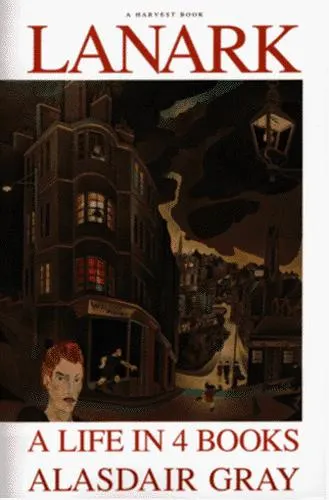
Lanark opens in Unthank, a city without daylight where people acquire grotesque illnesses that seem to expose their inner lives. Gray shares Lindsay’s gift for turning metaphysics into anatomy: alienation, appetite, vanity, and despair become physical conditions, while the world keeps shifting between social reality, nightmare, and allegory.
Yet Lanark has a voice entirely its own—funny, argumentative, visually inventive, and painfully humane. Its fractured structure asks whether a life can be understood from inside it, and whether recognizing one’s failures is enough to escape them. Since its 1981 publication it has become a landmark of Scottish fiction; its cultish strangeness and emotional reach make it one of the few modern novels that can follow Arcturus without seeming timid.
Harrison begins not with a triumphant passage into another realm but with three people living in the damaged aftermath of an attempt to reach one. From there he creates a modern Gnostic novel about longing for transcendence—and about the lies, evasions, and collateral suffering that such longing can conceal.
This is the closest match to Lindsay’s spiritual ferocity. Harrison’s numinous glimpses never settle into comforting mythology; beauty may be revelation, projection, or bait. His exact, haunted prose gives ordinary English rooms and roads the pressure of another reality just out of sight. A touchstone for readers of literary weird fiction, The Course of the Heart is brief but inexhaustible: it leaves behind the disturbing sense that the impossible world was real, and that its reality may not save anyone.