Author
Books like Connie Willis
5 books we recommend to Connie Willis readers, drawn from To Say Nothing of the Dog and Bellwether — each with the reason why.
If you loved To Say Nothing of the Dog
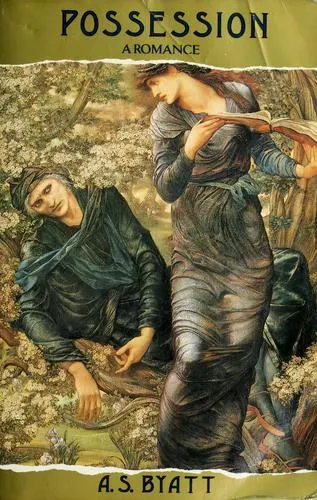
Two modern scholars discover evidence of a hidden connection between celebrated Victorian poets and begin following its traces through letters, diaries, poems, and archives. Like Willis, Byatt makes research feel adventurous: every scrap of text may alter the story, while professional rivalries and incomplete information keep the machinery whirring.
The novel also shares Willis’s affectionate but unsentimental fascination with Victorian manners and modern people’s misconceptions about them. Byatt invents an entire body of nineteenth-century writing, yet the result is never merely an intellectual exercise; it becomes a moving double romance and a sly comedy of academic vanity. Its Booker Prize is no mystery: few novels make erudition this suspenseful or literary detective work this intoxicating.
Douglas Adams builds a mystery from an impossible sofa, a missing cat, a distracted professor, Coleridge, and assorted events that appear to have wandered in from unrelated novels. Dirk’s guiding belief is that everything is connected—and the delight lies in watching apparent nonsense become causality.
That makes it an ideal companion to Willis’s comic time-travel construction. Both authors treat chronology as a source of jokes and narrative engineering, planting absurd details that later reveal themselves as gears. Adams’s cult reputation rests on precisely this mixture of metaphysical audacity, dry English comedy, and sentences worth rereading simply for their timing.
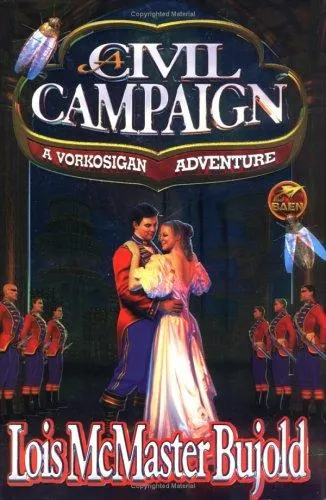
Miles Vorkosigan, brilliant at military improvisation and disastrous at straightforward courtship, attempts to manage his romantic future as though it were a covert operation. Around him gather political schemes, biological entrepreneurship, family interference, concealed motives, and a dinner party of almost legendary catastrophic perfection.
Readers who loved Ned Henry’s harried decency, Verity Kindle’s competence, and the escalating social disasters of To Say Nothing of the Dog will recognize the pleasure immediately. Bujold turns misunderstandings into a precision instrument: every character wants something different, every secret creates another collision, and the farce remains grounded in real tenderness. Devotees of the Vorkosigan Saga often cherish this as one of its happiest achievements—a science-fiction comedy of manners with both emotional intelligence and impeccable comic timing. It is approachable alone, though reading Komarr first gives its romance still greater force.
If you loved Bellwether
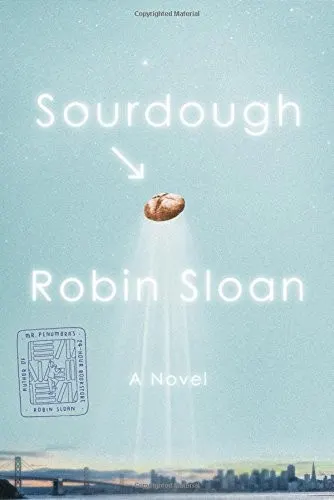
Lois Clary writes software for robotic arms at a San Francisco company whose culture treats exhaustion as evidence of worth. Then an unusual sourdough starter enters her life and begins drawing her toward bakers, experimental food, and an underground marketplace full of seductive new ideas.
Sloan understands, as Willis does, that trends are funniest when everyone involved is intelligent, earnest, and slightly blinded by enthusiasm. Sourdough affectionately skewers optimization culture, artisanal prestige, and technological solutionism without becoming cynical. Its heroine’s curiosity keeps opening doors, and the novel has the same rare mixture of systems thinking, gentle absurdity, and faith that unexpected connections can improve a life.
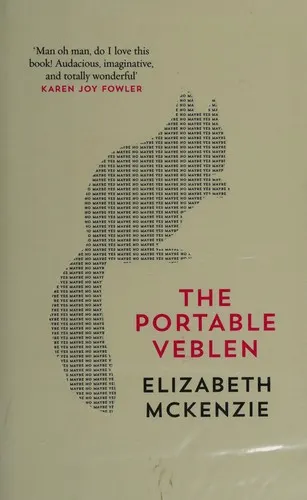
Veblen is an eccentric, observant temp worker engaged to Paul, an ambitious neurologist whose medical invention attracts the attention of a powerful corporation. Their impending marriage brings careers, difficult families, private anxieties, and competing definitions of success into comic collision. There are also squirrels, with whom Veblen may or may not communicate.
The kinship lies in McKenzie’s fascination with human behavior: why people follow prestige, suppress inconvenient perceptions, or confuse conformity with good judgment. Yet this Baileys Prize-shortlisted novel is warmer and stranger than a conventional social satire. Its romance depends on whether two imperfect people can see past the stories institutions and families have written for them. Funny, psychologically exact, and unexpectedly moving, it gives eccentricity the dignity Bellwether gives independent thought.