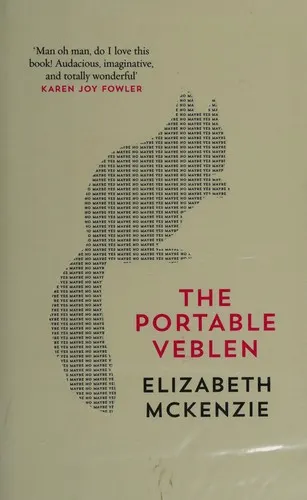
Books like The Portable Veblen
While Paul waits for Veblen’s answer to his proposal, a squirrel outside appears to be conducting a loud counterargument. These novels share McKenzie’s rare ability to make eccentricity revealing: each is funny about love, alert to the nonhuman world, and skeptical of the institutions that call themselves normal.
If you liked The Portable Veblen, you’ll love these
Not lookalikes — kindred books. Each one shares something essential with The Portable Veblen, and we tell you exactly what.
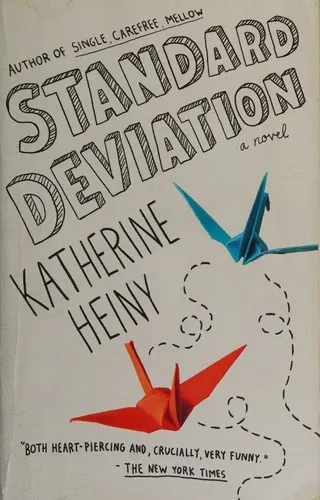
For the sheer pleasure of watching a peculiar mind disrupt respectable life, begin here. Graham’s second wife, Audra, is voluble, indiscreet, boundlessly sociable, and exhausting; his first wife is her immaculate opposite. Heiny turns their orbit into an exceptionally funny examination of marriage—not as a verdict on compatibility, but as the daily practice of accommodating another person’s strangeness.
Like McKenzie, Heiny writes jokes that deepen rather than deflect feeling. A conversation can be farcical and quietly devastating at once; an irritating habit can become evidence of generosity. The novel has earned lasting reader devotion because Audra is not merely a lovable eccentric but a challenge to conventional ideas of dignity, privacy, and a well-managed life. Anyone who loved Veblen’s unruliness will miss Audra when the book ends.
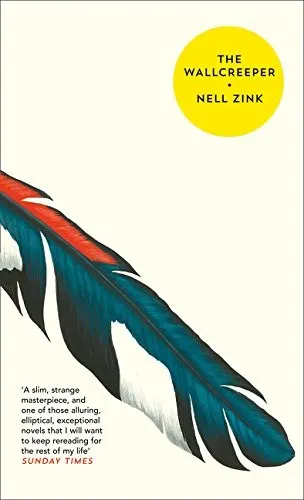
Nell Zink’s cult-favorite debut is the sharper, more feral recommendation: a compact novel about marriage, birds, environmental conviction, and the difficulty of making one’s ideals survive contact with appetite. Its narrator, Tiffany, possesses Veblen’s sideways intelligence but expresses it with more bite; she sees through social performances even while improvising her own.
The real kinship lies in how both novels refuse to separate the ridiculous from the serious. Zink can pivot from slapstick to ecological grief or marital disillusionment without changing her deadpan pitch. Birds here are neither decorative symbols nor substitutes for people: attending to them becomes a test of whether human beings can value anything beyond themselves. The prose is fast, audacious, and gloriously unsentimental—the sort of novel that makes safer comic fiction feel domesticated.
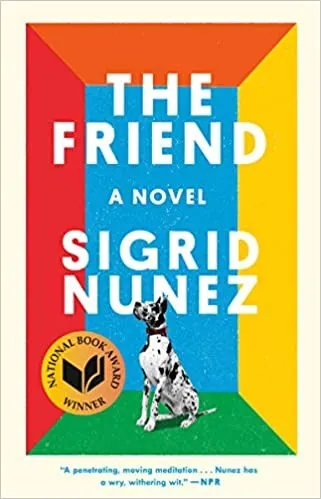
If Veblen’s conversations with squirrels felt less like whimsy than an enlargement of consciousness, read Sigrid Nunez’s National Book Award winner. It begins in the wake of a beloved friend’s death and develops as an intimate, searching address to the absent—part elegy, part meditation on writing, part account of the strange responsibilities created by love.
Nunez shares McKenzie’s suspicion that ordinary human language is often least trustworthy when it sounds most authoritative. She examines grief, artistic vanity, teaching, and companionship with dry wit, while taking an animal’s inner life seriously without pretending it can be fully translated. The result is slender but inexhaustible: intellectually playful, emotionally exact, and capable of making attention itself feel like an ethical act.