Author
Books like C. J. Cherryh
3 books we recommend to C. J. Cherryh readers, drawn from Cyteen — each with the reason why.
If you loved Cyteen
Maya is a journalist whose nervous system records experience for broadcast—and leaves her thoughts vulnerable to surveillance and control. Carter makes that premise intensely intimate: every perception raises the question Cyteen asks so well—whether a self can remain genuinely its own when institutions can edit the conditions under which it thinks.
This is leaner and more claustrophobic than Cherryh, but comparably unwilling to simplify coercion, complicity, love, or truth. Winner of the award now called the Otherwise Award, it has acquired a devoted cult reputation because no other cyberpunk novel sounds or hurts quite like it. Readers drawn to Cyteen’s psychological machinery should consider it essential.
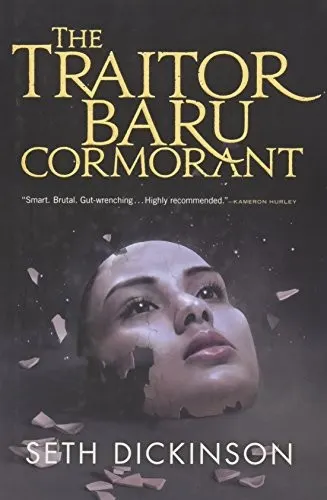
When an expansionist empire absorbs Baru’s homeland, she chooses its schools and civil service as her route to power. What follows begins not with heroic combat but with accountancy, trade policy, education, and the terrifying realization that administration can refashion people more thoroughly than armies can.
Dickinson shares Cherryh’s gift for making exceptional intelligence thrilling without making it safe. Baru’s calculations are inseparable from her loyalties, desires, and blind spots; the closer she comes to mastering the system, the harder it becomes to say where resistance ends and conditioning begins. This modern political-fantasy touchstone delivers the rare pleasure of watching a formidable mind work while fearing what that work is doing to the person inside it.
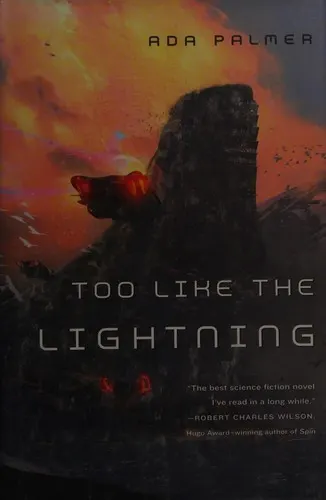
Ada Palmer expects the reader to enter a functioning civilization without a guidebook and learn its hidden architecture by watching people maneuver within it. Her twenty-fifth century has replaced nations with voluntary global affiliations, yet power, patronage, ideology, and family remain dangerously entangled. Mycroft Canner, a convicted criminal serving a public sentence, narrates in a manner at once confessional, theatrical, learned, and profoundly suspect.
The kinship with Cyteen lies in the density of the social design and in the conviction that politics is psychological before it is procedural. Conversations alter the balance of civilizations; gifted children become objects of institutional desire; private attachments expose faults in supposedly rational systems. This Hugo-finalist novel opens the Terra Ignota quartet, one of contemporary science fiction’s most audacious projects, and rewards exactly the kind of alert, argumentative reading that Cherryh inspires.