Author
Books like Beryl Bainbridge
6 books we recommend to Beryl Bainbridge readers, drawn from An Awfully Big Adventure and The Bottle Factory Outing — each with the reason why.
If you loved An Awfully Big Adventure
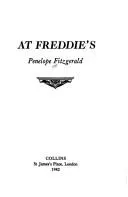
Freddie Wentworth runs a shabby London school supplying child actors to stage and television. Yet the kinship goes deeper than theatrical scenery: Fitzgerald understands performance as a habit that infects ordinary life. Children negotiate like professionals, adults improvise authority, and vanity can look almost indistinguishable from devotion.
Fitzgerald’s comedy is drier and gentler than Bainbridge’s, but just as exact. A tiny gesture can expose years of self-deception, while impending disaster hides inside farce. This compact novel has become a particular favorite among admirers of the Booker-winning Fitzgerald because it displays her rarest gift: making an eccentric little world seem funny, fragile, and complete.
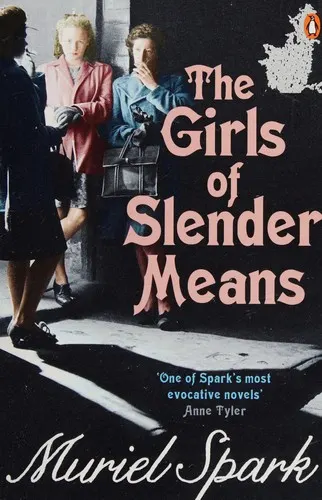
In 1945, the residents of London’s May of Teck Club share ration coupons, gossip, romantic strategies, and a single Schiaparelli dress that each can borrow if she is thin enough. Spark turns these bright details into an anatomy of glamour under pressure: the young women continually recast poverty and danger as scenes in a more flattering story.
Like Bainbridge, Spark lets the reader perceive consequences that her characters cannot. Her poised, darting chronology gives every joke a shadow, and her coolness makes the flashes of tenderness more piercing. Often counted among Spark’s finest novels, it achieves in barely more than a hundred pages the density and aftershock of a much larger book.
Sophia Fairclough, a young artist, rushes into marriage with another painter and recounts what follows in a voice of extraordinary guilelessness. She reports humiliations, absurdities, and small domestic catastrophes with such matter-of-fact charm that the reader repeatedly understands their seriousness before she does—the same painful advantage Bainbridge gives us over Stella.
Comyns’s apparent simplicity is cunning: funny anecdotes gradually reveal selfishness, economic vulnerability, and the price paid by someone determined to treat life as a romantic adventure. Long neglected and repeatedly rediscovered, this cult classic inspires fierce devotion. Its mixture of buoyancy and desolation is unlike almost anything else.
If you loved The Bottle Factory Outing
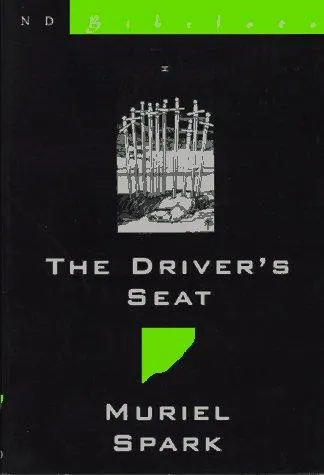
Spark begins with a woman buying an aggressively colored outfit and turns every ordinary encounter into something brittle, comic, and ominous. Like Bainbridge, she refuses the cushioning comforts of psychological realism: people expose themselves through clothes, gestures, misunderstandings, and disastrously misplaced confidence.
This is one of Spark’s strangest and most fiercely admired novels, short enough to read at a sitting but too unsettling to shake off. Its heroine’s determination gives the book a terrible forward pull; the laughter catches in your throat almost as soon as it escapes. If you loved how The Bottle Factory Outing makes farce seem governed by fate, this is essential.
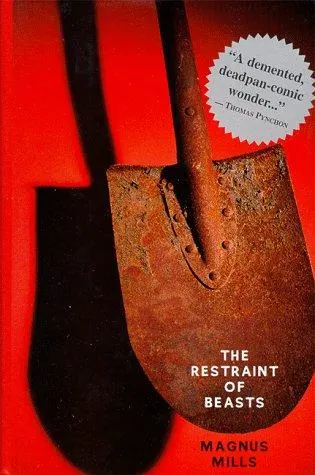
A newly promoted foreman must supervise Tam and Richie, two spectacularly unenthusiastic fencing workers whose days revolve around avoiding labor and reaching the pub. Mills narrates their mounting mishaps in the flat, conscientious tone of a workplace report—a tone that becomes funnier and more alarming as events slip beyond anyone’s control.
This Booker-shortlisted debut has Bainbridge’s genius for deadpan escalation: incompetence hardens into menace without the prose ever raising its voice. Mills also understands that hierarchy is inherently comic when nobody is competent enough to enforce it. Few novels make repetition, bad workmanship, and moral evasion so hypnotic.
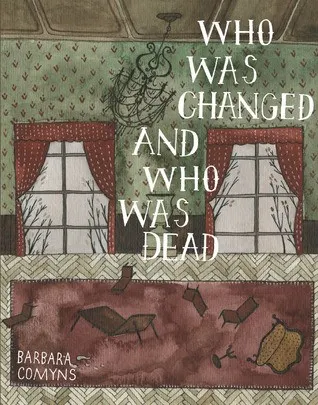
Comyns opens with a flooded English village where ducks swim through the house while the family carries on upstairs. That image announces her method: calamity observed with such calm, peculiar exactness that horror and comedy become impossible to separate.
Her characters are vulnerable to petty tyrannies, sudden cruelty, appetite, illness, and sheer bad luck, yet the novel never becomes ponderous. Its lucid, almost childlike sentences make the grotesque feel natural and the natural deeply strange. Long treasured as a cult classic, it has the same dangerous innocence as Bainbridge’s novel—the sense that absurd social rituals are continuing only inches from disaster. Missing it would mean missing one of English fiction’s most singular black comedies.