Author
Books like Auguste Maquet
3 books we recommend to Auguste Maquet readers, drawn from The Count of Monte Cristo — each with the reason why.
If you loved The Count of Monte Cristo
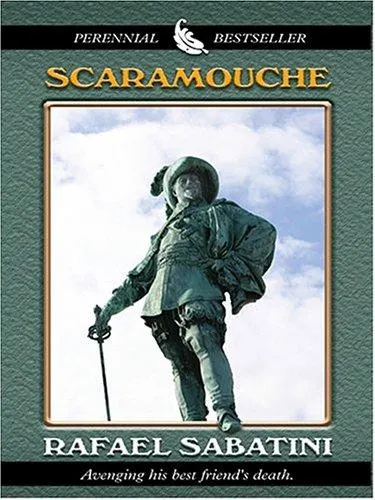
Sabatini offers the closest equivalent to Dumas’s exhilarating blend of personal grievance, historical upheaval, disguise, wit, and virtuoso adventure. After a powerful aristocrat kills his friend, André-Louis Moreau discovers that revenge requires more than courage: he must repeatedly reinvent himself, mastering words, theater, politics, and the sword.
What makes Scaramouche indispensable is the elegance of its momentum. Every new role André-Louis assumes becomes both a weapon and a revelation of character, while the French Revolution gathers force around him. Sabatini’s famous opening sentence—declaring that his hero was “born with a gift of laughter and a sense that the world was mad”—perfectly announces a novel at once romantic, sardonic, and thrilling. Few swashbucklers match its combination of intellectual combat and physical spectacle.
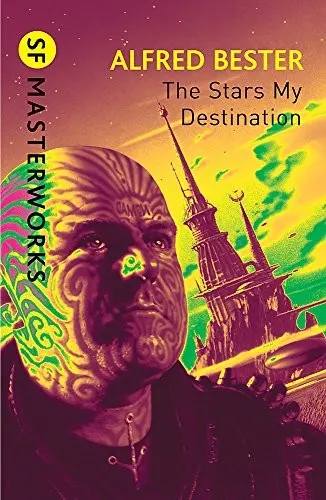
This science-fiction classic takes the engine of Monte Cristo—imprisonment, self-transformation, inexhaustible rage—and rebuilds it as something savage and futuristic. Gully Foyle begins as an abandoned, nearly inarticulate nobody, marooned in space; when rescue deliberately passes him by, vengeance awakens capacities he never knew he possessed.
Bester compresses an enormous revenge epic into a short novel that seems to accelerate as you read. Its hero’s education is thrilling but morally corrosive, and its typography, telepathy, and explosive imagery helped change what science fiction could do on the page. Devoted readers return not merely for the pursuit but for the disturbing question beneath it: if hatred remakes a man completely, who—or what—has won?

For the reader who found more than ingenious revenge in Dumas—who responded to questions of justice, mercy, fate, social cruelty, and whether a human being can truly become someone new—Hugo’s vast masterpiece is essential. It begins with a bishop’s radical compassion and Jean Valjean’s emergence from nineteen brutal years of imprisonment, then expands until private moral choices seem to carry the weight of history.
Hugo builds suspense through pursuit, concealment, coincidence, sacrifice, and spectacular reversals, but his real achievement is emotional magnitude. Paris becomes an entire moral universe, embracing criminals, children, lovers, revolutionaries, and the forgotten poor. Les Misérables has inspired generations of fierce devotion because it does what only the largest novels attempt: it makes individual lives feel both intimate and world-historical. Finishing it can leave ordinary-sized fiction feeling temporarily insufficient.