Author
Books like Anthony Berkeley Cox
7 books we recommend to Anthony Berkeley Cox readers, drawn from Malice Aforethought, The Poisoned Chocolates Case and Trial and Error — each with the reason why.
If you loved Malice Aforethought
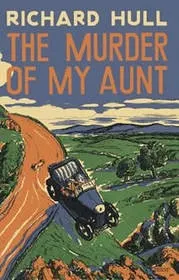
Edward Powell is an indolent, preening young man trapped in rural Wales with an aunt he despises—and whose death he begins to contemplate with increasing practical interest. His first-person narration is wonderfully venomous: fastidious, self-pitying, very funny, and far less self-aware than he imagines.
Like Malice Aforethought, this cult Golden Age favorite makes murder both a logistical project and a battle of personalities. Its comedy sharpens rather than softens the cruelty, while Hull’s control of point of view keeps shifting the balance between complicity and ridicule. Anyone who enjoyed Dr. Bickleigh’s ingenious resentments should meet Edward Powell—and the formidable woman he disastrously underestimates.
Before creating Horatio Hornblower, Forester wrote this ferociously compact study of William Marble, a debt-ridden bank clerk who sees an appalling solution when a wealthy young relative visits. The important question is never simply whether a crime can be committed, but whether its benefits can be enjoyed afterward.
Forester understands, as Cox does, that guilt works through mortgages, meals, marriages, and pauses in conversation. Money begins to alter the emotional temperature of Marble’s household; every apparent improvement acquires a new menace. Adapted for both stage and film, the novel remains one of the foundational psychological crime stories—a remorseless demonstration that successful murder may be its own most elaborate punishment.
Rendell begins by naming the killer, the victims, and the cause of the crime. That audacious first sentence abolishes the conventional puzzle and replaces it with something more disturbing: an exact reconstruction of how private shame, class unease, misunderstanding, and chance converge on an inevitable catastrophe.
The kinship with Malice Aforethought lies in its pitiless social intelligence. Rendell observes ordinary domestic arrangements until they become instruments of doom, and her irony is cool enough to make each missed warning almost unbearable. Often regarded as one of her masterpieces—and memorably filmed by Claude Chabrol as La Cérémonie—it is a model of the inverted crime novel: you know what will happen, yet desperately read on as though knowledge might still prevent it.
If you loved The Poisoned Chocolates Case
A locked-room murder attracts three celebrated amateur sleuths, each a wickedly recognizable parody of a Golden Age giant: one aristocratic, one fastidious and foreign, one clerical and intuitive. Each constructs an elegant explanation—while the stolid Sergeant Beef keeps insisting that ordinary police work matters.
Bruce’s cult classic offers the closest equivalent to Berkeley’s round-robin pleasure: competing solutions reveal as much about the detectives’ habits and vanity as about the crime. Yet the parody never cheapens the puzzle. It is affectionate, tightly engineered, and capped by the delicious spectacle of genre conventions being defeated from within.
Years ago, reclusive mathematician Grant McAllister wrote seven murder stories designed around the logical ingredients of detective fiction. Now an editor visits him to prepare a new edition—and notices that the stories contain discrepancies he cannot satisfactorily explain.
Pavesi recreates Berkeley’s intoxicating mixture of fiction, criticism, and intellectual combat. Every embedded mystery is both a puzzle and an argument about how puzzles work; every conversation between author and editor subtly changes the evidence. The result is not merely clever but compulsive: it teaches you its rules, invites you to become the next detective, and then makes you distrust the very act of interpretation.
There is no conventional narrator here. Instead, two law students sift through emails, texts, letters, and announcements exchanged by the members of an amateur theatre company, trying to determine what happened and which details everyone else overlooked.
The form produces the same pleasure as Berkeley’s succession of theories, but transfers the work to the reader. A pompous sign-off, an oddly timed message, or a conspicuous silence may overturn your understanding of an entire relationship. Hallett also has Berkeley’s eye for the comedy of self-important groups: alliances, grudges, and performances leak through every message. A major word-of-mouth bestseller, it made the dossier mystery feel newly alive—and it is almost impossible to read without forming, revising, and fiercely defending your own solution.
If you loved Trial and Error
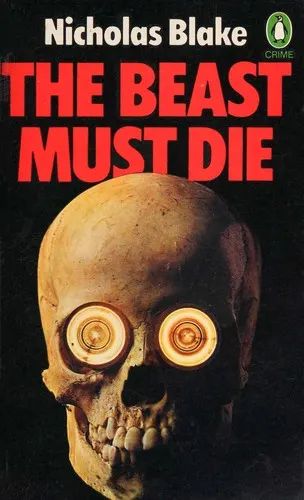
The novel begins with a declaration of murderous intent: a grieving father means to find and kill the person responsible for his son’s death. That apparently simple vow becomes an exquisitely engineered contest between emotion and evidence, with diary entries, shifting interpretations, and the intervention of poet-detective Nigel Strangeways.
Like Trial and Error, it asks whether a murder can be morally intelligible while remaining legally indefensible—and whether controlling the story of a crime is harder than committing it. Nicholas Blake, the detective-fiction name of future Poet Laureate Cecil Day-Lewis, gives the book unusual emotional force without sacrificing Golden Age cleverness. Its enduring adaptations and reputation are deserved: the opening hook is irresistible, but the reversals are what make it unforgettable.