Author
Books like Akhil Sharma
3 books we recommend to Akhil Sharma readers, drawn from Family Life — each with the reason why.
If you loved Family Life
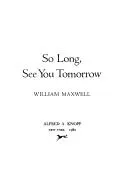
Maxwell’s slender masterpiece has the same miraculous plainness as Family Life: sentences so modest and lucid that their emotional force seems to arrive without authorial pressure. An aging narrator remembers a childhood friendship shadowed by violence, then worries at everything he failed to understand or do. Like Ajay, he reconstructs the past from shame, partial knowledge, and the belated intelligence of adulthood.
Maxwell was a legendary New Yorker fiction editor, but this William Dean Howells Medal–winning novel is the work that inspires particular devotion. It turns memory into a moral act without pretending memory can repair anything. If Sharma’s restraint—his refusal to beautify pain or simplify guilt—was what pierced you, Maxwell’s final pages will feel indispensable.

Young Shuggie’s love for his alcoholic mother, Agnes, has the fierce attentiveness of a child who is always taking the emotional temperature of the room. He notices her glamour, her evasions, her suffering, and the humiliations that other people reduce her to. As in Family Life, devotion gradually acquires the exhausting texture of care: vigilance, hope, embarrassment, anger, and renewed loyalty.
Stuart writes more expansively than Sharma, filling working-class Glasgow with sharp voices, cruelty, jokes, clothes, gestures, and thwarted pride. Yet the Booker Prize–winning novel shares Sharma’s refusal to divide a damaged household into saints and villains. Shuggie Bain is devastating not because it is relentlessly bleak, but because its love remains so vivid and unreasonable. Shuggie and Agnes are difficult to leave behind.

Yolandi wants to keep her brilliant, beloved sister Elf alive; Elf wants something Yolandi cannot bear to grant. From that conflict, Toews creates one of the truest novels about the arrogance, necessity, and limits of trying to save another person. A reader who recognized the Mishras’ mixture of tenderness and resentment will recognize this family too: they use jokes, arguments, food, memories, and sheer physical presence as improvised defenses against despair.
What makes the novel extraordinary—and earned it the Writers’ Trust Fiction Prize—is its comedy. Toews can make a hospital room genuinely funny without trivializing what brought anyone there. Her wit is not relief from grief but the family’s native language, just as Sharma’s deadpan comedy reveals rather than softens suffering. Few novels understand so well that love may be boundless while its power is not.