Author
Books like Abdi Nazemian
3 books we recommend to Abdi Nazemian readers, drawn from Like a Love Story — each with the reason why.
If you loved Like a Love Story
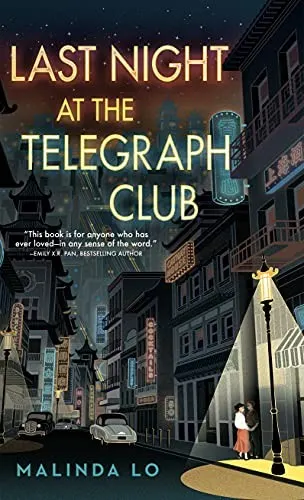
Like Nazemian, Lo places a queer teenager at the collision point of desire, family loyalty, and a hostile political climate. In 1950s San Francisco, Chinese American Lily Hu is drawn toward the Telegraph Club and its magnetic male-impersonator performer, even as McCarthy-era suspicion threatens her family.
Lo renders first love through wonderfully physical details—the charged walk home, the saved photograph, the shock of encountering a place where another life seems possible. Winner of the National Book Award for Young People’s Literature, this is historical fiction with a living pulse: tender, exact, and quietly electrifying.

If Madonna’s music, Art’s defiance, and Reza’s struggle to name himself were central to your love of Like a Love Story, meet Michael, a mixed-race gay British boy who discovers drag and begins creating the Black Flamingo persona. Atta’s verse strips each emotional turn to its brightest essentials, moving effortlessly between loneliness, humor, desire, race, masculinity, and the exhilaration of self-invention.
This Stonewall Book Award winner refuses to treat queer identity as either tragedy or a tidy triumph. It understands performance as a way of becoming more truthful, not less—and its climactic sense of confidence feels earned line by line. It is the rare novel you can devour in one sitting and carry around in your head for years.
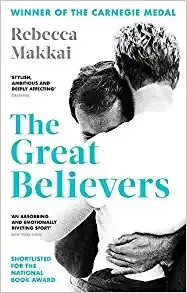
For readers haunted by Nazemian’s depiction of the AIDS crisis—especially its mingling of terror, fury, loyalty, and irrepressible life—Makkai’s acclaimed adult novel is indispensable. It opens in 1985 Chicago, where Yale Tishman’s circle of friends is being devastated by AIDS, and pairs their story with Fiona, decades later, confronting what survival has cost.
A Pulitzer Prize finalist and winner of the Andrew Carnegie Medal, the novel earns its stature through intimate precision rather than solemnity. Makkai captures teasing conversations, disastrous parties, chosen families, political abandonment, and the exhausting practical work of caring for people. Like Like a Love Story, it insists that those lost to AIDS must be remembered not as symbols but as difficult, funny, desiring individuals. Reading it feels less like observing history than being entrusted with lives.