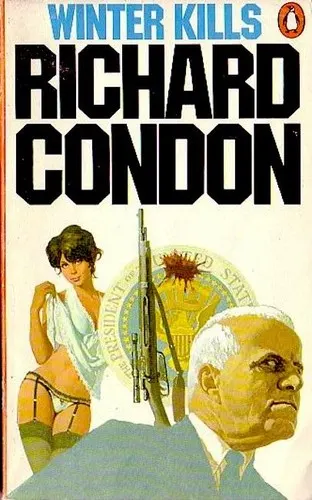
Books like Winter Kills
Power wears a clown mask; every revelation opens onto a deeper fraud, and the national nightmare remains horribly funny. These three novels preserve that blend of political menace, manic invention, and suspicion that reality itself has been rigged.
If you liked Winter Kills, you’ll love these
Not lookalikes — kindred books. Each one shares something essential with Winter Kills, and we tell you exactly what.
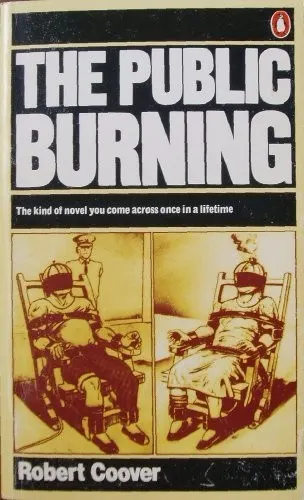
Coover turns the Rosenberg execution into a grotesque Times Square pageant presided over by Uncle Sam, with Richard Nixon as its yearning, self-deceiving witness. Like Condon, he treats American politics as both murderous machinery and gaudy show business: slogans become incantations, public figures become mythological monsters, and obscenity keeps breaking through ceremony.
This is denser and more formally audacious than Winter Kills, but it has the same exhilarating refusal to separate farce from terror. Long regarded as one of Coover’s defining achievements, it is the rare political novel whose excess feels proportionate to its subject. Skip it and you miss perhaps the fullest literary expression of the idea that America’s official story is its wildest conspiracy.
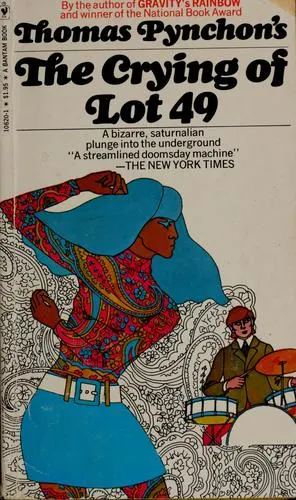
Oedipa Maas is appointed executor of an old lover’s estate and begins noticing signs of what may be a hidden communications network—or may be the pattern her frightened mind needs to find. Pynchon gives every clue an electric double meaning: evidence promises clarity while making certainty less possible.
A reader who loved Winter Kills will recognize the intoxicating rhythm of discovery, reversal, and renewed suspicion, along with the comedy of trying to think rationally inside an irrational system. Short, endlessly reread, and now a touchstone of American fiction, this is the purest distillation of conspiracy as both political condition and state of consciousness.
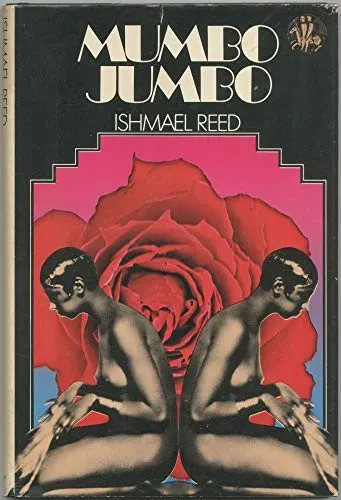
A contagious cultural force called Jes Grew is spreading through America, provoking a secret order devoted to suppressing it. Reed tells the struggle through detective fiction, fabricated scholarship, photographs, manifestos, jokes, and historical sabotage. The result behaves less like a conventional novel than like a dossier that has escaped custody and started mocking its keepers.
Where Condon exposes respectable authority as dynastic, venal, and insane, Reed asks who manufactured respectability in the first place—and whose history had to be buried beneath it. A landmark of Black postmodernism with lasting cult devotion and influence, Mumbo Jumbo makes paranoia intellectually liberating without making it safe. Its audacity still feels unmatched.