Books like Westmark
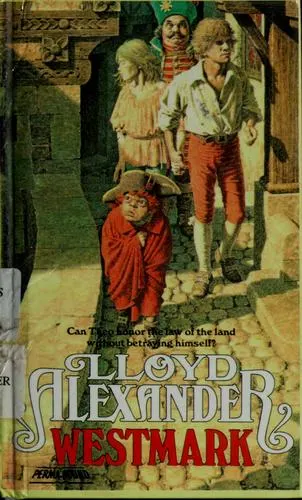
Westmark and Frances Hardinge’s Fly by Night are rare young readers’ novels that treat words, power, and revolution with equal seriousness. These three books share Lloyd Alexander’s wit, moral complexity, and faith in young people forced to think politically without becoming political symbols.
If you liked Westmark, you’ll love these
Not lookalikes — kindred books. Each one shares something essential with Westmark, and we tell you exactly what.
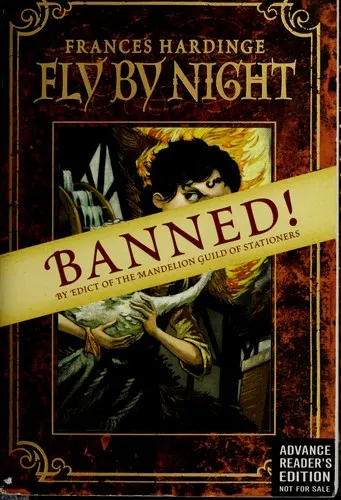
Mosca Mye, a sharp-tongued fugitive accompanied by a homicidal goose, falls in with a fraudulent wordsmith and enters a city divided among guilds, religious factions, and secret interests. Like Westmark, the novel understands that printing, storytelling, and public belief can be as consequential as weapons.
Hardinge gives every faction plausible motives and hidden costs; liberation can become another form of control, while scoundrels sometimes prove more useful than respectable people. Yet the book is also gloriously funny, packed with verbal invention and characters who seem capable of escaping their author’s control. Winner of the Branford Boase Award and now a much-loved modern children’s classic, Fly by Night offers the closest thing to Westmark’s distinctive blend of adventure, satire, and political awakening.
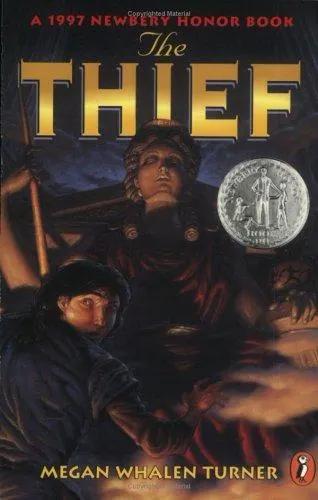
Gen begins the novel in prison, boasting that he can steal anything. A royal official takes him at his word and brings him on an expedition to recover an object that could alter the balance of power among neighboring kingdoms.
What will feel familiar is not the quest but Alexander’s kind of narrative intelligence: lively companions, apparently casual dialogue, clashing ideas about rulership, and characters whose loyalties cannot be reduced to good and evil. Turner writes with elegant economy, making every complaint, folktale, and roadside quarrel matter. This Newbery Honor novel opened the Queen’s Thief series, whose intricate plotting and unforgettable political relationships have inspired unusually devoted readers; finishing it without wanting the next volume is difficult.
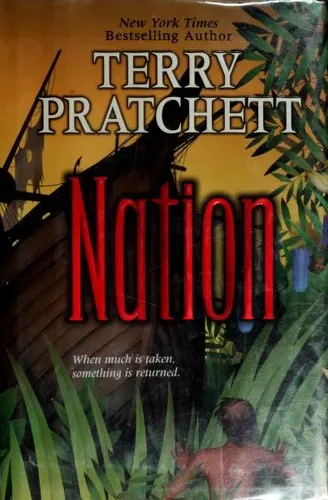
After catastrophe destroys Mau’s island community, he and the shipwrecked Daphne must create order among the survivors. They begin with immediate necessities—food, shelter, burial—but soon confront larger questions: Who has authority? Which traditions deserve obedience? What can replace certainty when the old world has failed?
That movement from personal crisis to political and moral responsibility is pure Westmark. Pratchett refuses both empty cynicism and easy idealism: institutions are necessary, inherited beliefs can be cruel or sustaining, and decent choices may still exact a price. A Printz Honor book, Nation is one of Pratchett’s most deeply admired novels—furiously intelligent, very funny, and finally moving in the way only a story about rebuilding the world from first principles can be.