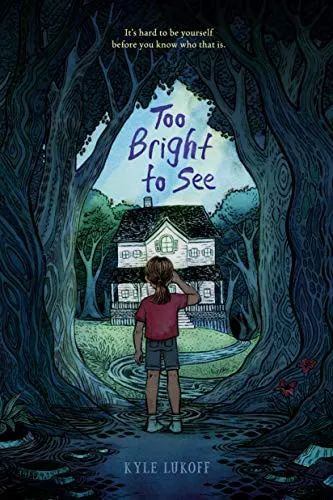
Books like Too Bright to See
As summer begins with Uncle Roderick newly dead, Bug can feel the old house filling with grief—and with something harder to name. These novels share that gift for letting the uncanny, the unspoken, and a child’s emerging identity illuminate one another.
If you liked Too Bright to See, you’ll love these
Not lookalikes — kindred books. Each one shares something essential with Too Bright to See, and we tell you exactly what.
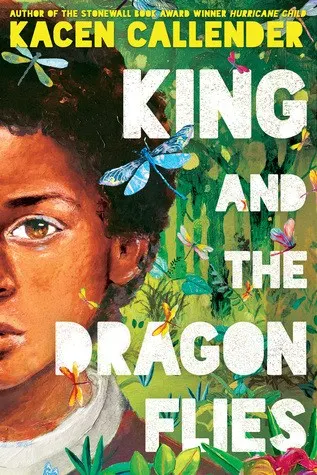
King is mourning his older brother, Khalid, whom he imagines has become a dragonfly. At the same time, he is struggling with feelings he has been taught to fear and conceal.
Like Too Bright to See, this novel understands that grief and self-discovery do not proceed separately or neatly. Callender’s luminous prose stays close to King’s confusion without reducing it to a lesson; images and half-beliefs express what he cannot yet say aloud. Winner of the National Book Award for Young People’s Literature, it has the emotional precision of a book readers carry for years.
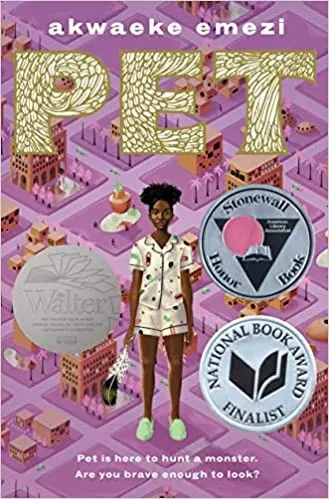
In the seemingly peaceful city of Lucille, a trans girl named Jam accidentally brings a strange, horned being out of one of her mother’s paintings. Pet insists that a monster is hiding nearby—even though the adults claim monsters no longer exist.
Emezi shares Lukoff’s profound respect for children’s perceptions: the supernatural is not mere decoration but a way of revealing truths adults avoid. Jam’s transness is integral to her yet never treated as a problem requiring explanation. This National Book Award finalist is stranger, sharper, and darker than Too Bright to See, but it offers the same exhilarating experience of watching a child learn to trust what she knows.
Ash is genderfluid and tired of being forced into categories; Daniel is a boy whose tenderness is constantly misread. When they become involved in helping a threatened dog, their alternating accounts reveal how differently—and incompletely—two people can understand the same relationship.
There are no ghosts here, but Machias captures one of Lukoff’s finest achievements: the tentative, private process of finding language for yourself while everyone else rushes to define you. Ash’s identity shifts without becoming a puzzle to solve, and Daniel’s sensitivity is treated as strength rather than failure. Warm, funny, and emotionally exact, this is the book for readers who loved Bug’s realization that uncertainty can be a form of truth.