Books like The Voice
The Voice lingers because its English seems newly made: Okara turns a moral search into a struggle inside language itself, where every strange phrase exposes both a culture and a conscience. These three novels share that transforming power without merely repeating Okolo’s journey.
If you liked The Voice, you’ll love these
Not lookalikes — kindred books. Each one shares something essential with The Voice, and we tell you exactly what.
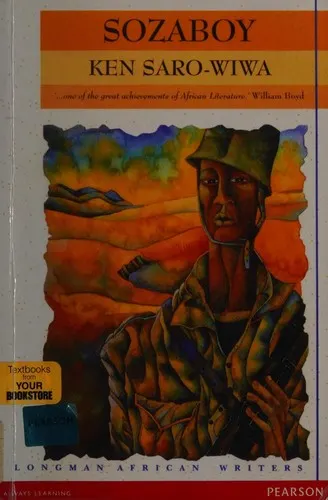
Saro-Wiwa’s subtitle, “A Novel in Rotten English,” names its great invention: the bewildered voice of Mene, a young recruit whose speech mixes Nigerian Pidgin, broken bureaucratic jargon, and flashes of accidental poetry. As in The Voice, unconventional English is not decoration; it determines what the protagonist can understand and reveals how political language disguises brutality.
The voice begins comically, then becomes devastating as Mene encounters the realities hidden behind grand words about war and nation. Saro-Wiwa—later executed by Nigeria’s military regime—made this a classic of African war writing, but its lasting force lies in its intimacy: history reaches us through one vulnerable, unforgettable idiom.
If Okara’s sentences delighted you by making thought feel physical, enter Kojo Laing’s Accra. His prose darts between street talk, philosophical speculation, satire, and surreal metaphor; conversations seem capable of changing the temperature of the city. Yet beneath the exuberance is a serious question familiar from The Voice: how can an individual live truthfully in a society crowded with hollow slogans and compromised authorities?
Laing gives that question not to a solitary allegorical seeker but to a restless community of workers, intellectuals, hustlers, and dreamers. Long cherished as a cult masterpiece of African modernism, Search Sweet Country offers the rare exhilaration of watching a novelist enlarge what English can perceive.
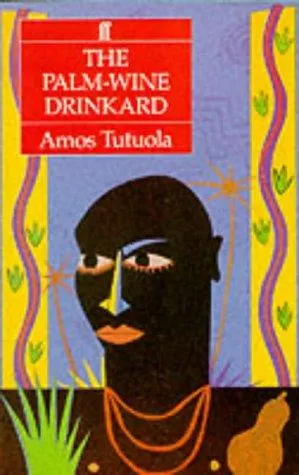
Tutuola’s novel has the raw authority of a tale told according to its own laws. Its narrator sets out for Dead’s Town after losing his extraordinary palm-wine tapster, and the journey unfolds through transformations, bargains, monsters, and moral tests drawn from Yoruba storytelling. The unstandardized English preserves oral momentum rather than submitting it to literary polish—precisely the kind of creative refusal that makes The Voice so singular.
Published in 1952 and praised early by Dylan Thomas, the novel became profoundly influential, though its audacity initially unsettled readers expecting “correct” English. Read it now and that audacity feels triumphant: a compact, inexhaustibly strange book that helped prove English could be remade around an African imagination rather than the reverse.